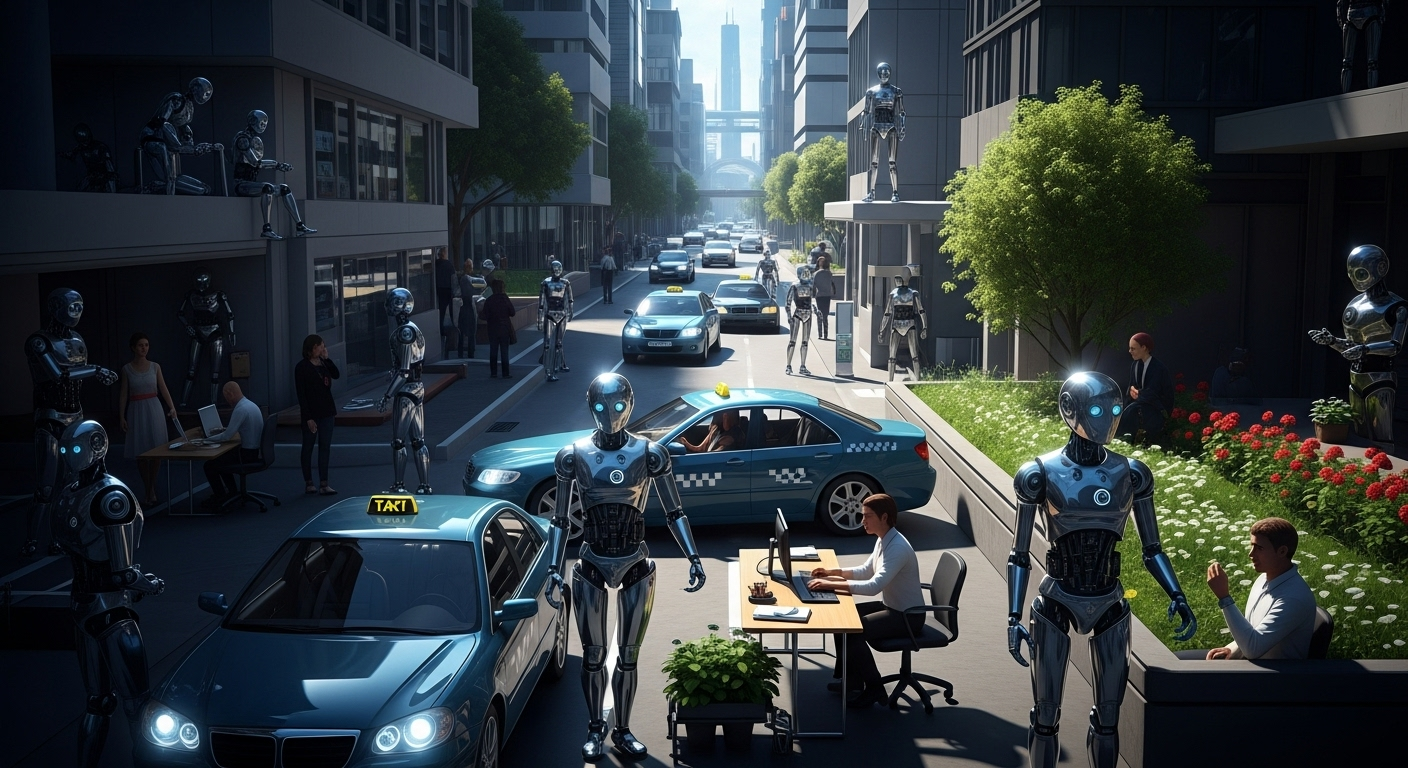
For centuries, creativity was seen as an exclusively human trait — the soul of artistry, invention, storytelling, and innovation. But today, machines compose music, paint artworks, write poems, and even design buildings. Thanks to Artificial Intelligence (AI), we’re forced to ask a once-unthinkable question:
Can machines truly be creative?
This article dives deep into the heart of this debate. We’ll explore:
What creativity really means
How AI mimics or generates creative work
Real-world examples of machine creativity
The philosophical and ethical implications
How humans and machines might collaborate in future creativity
💡 What Is Creativity, Really?
To explore whether machines can be creative, we first need to define creativity itself. At its core, creativity involves:
Originality: Producing something new or novel
Value: Creating work that is meaningful or useful
Imagination: Combining ideas in unique ways
Intent: Having a goal or expressive purpose
Humans create based on emotions, experiences, culture, and inspiration. But can AI systems that generate new ideas or content be called “creative” in the same way?
🎨 How AI Generates Creative Work
Modern AI systems don’t just follow static instructions. They learn from vast datasets using machine learning, particularly through techniques like neural networks and generative models.
✨ Generative AI at Work
These systems analyze patterns in data (like art, music, or literature), and then create new content based on what they’ve learned.
Types of AI Creativity:
Text: GPT models generate essays, poems, stories, and even scripts
Visual Art: DALL·E and Midjourney create original digital images based on text prompts
Music: AIVA and Amper Music compose original symphonies and pop tracks
Design: AI generates architecture, fashion sketches, and logos
📚 Real-World Examples of Machine Creativity
🎵 1. Music Composition by AIVA
AIVA (Artificial Intelligence Virtual Artist) composes classical music that’s been used in films, commercials, and games. It can replicate styles of famous composers and create new ones.
Use Case: A French studio used AIVA to score an entire short film soundtrack, reducing both cost and turnaround time without compromising quality.
🎨 2. AI-Generated Art Sells for $432,500
In 2018, an artwork titled Portrait of Edmond de Belamy, generated by a GAN (Generative Adversarial Network), was auctioned at Christie’s for over $400,000.
Impact: This shocked the art world and sparked global debate: is AI the artist, or is it just a tool?
🎙️ 3. AI Writing News and Stories
News agencies like Reuters and The Washington Post use AI to generate sports summaries and financial reports. Meanwhile, tools like ChatGPT write fiction, essays, and poetry.
Real Story: A self-published author used an AI co-writer to draft an entire science fiction novel in two months. It now has thousands of readers.
🏠 4. AI in Architecture and Design
Zaha Hadid Architects uses AI to generate experimental shapes and building concepts. The AI considers structural needs, sustainability, and aesthetics.
💃 5. AI-Generated Choreography
Researchers have trained AI systems to generate dance moves based on music beats. The resulting routines have been used in real performances and music videos.
⚖️ Can AI Be Truly Creative?
This is where the debate intensifies.
🧠 Arguments For:
AI produces novel outputs that surprise even their creators
It can mix styles in ways humans might not think of
It learns from human input but often “evolves” that input further
🚫 Arguments Against:
AI lacks consciousness, emotion, and intent
It doesn’t “understand” what it creates
It relies entirely on data provided by humans
Philosophical Question: If a machine creates something beautiful but doesn’t know it, is it still art?
👩🎓 Human-AI Collaboration: The New Creative Team
Rather than machines replacing artists, many believe the future lies in collaboration.
✨ Use Case: The AI-Powered Novelist
An author writes an outline and characters. The AI expands scenes, proposes twists, and suggests dialogue. The author fine-tunes the story.
Result: Faster drafting, creative brainstorming, and a unique hybrid style.
🎨 Artists as AI Curators
Rather than fearing replacement, many artists now see themselves as curators of AI creativity — directing, editing, and shaping machine output.
🌐 Ethical and Legal Considerations
🔒 Ownership and Authorship
If AI creates a painting or writes a book, who owns the rights?
The person who trained the AI?
The developer of the software?
The AI itself?
Legal systems are still grappling with these questions.
⚠️ Deepfakes and Misinformation
AI-generated content can be misused to mimic real people or spread fake news. With power comes responsibility.
⚖️ Cultural Bias and Data Limitations
AI creativity is limited by the data it’s trained on. This can lead to biased or culturally insensitive outputs.
🚀 The Future of Creative AI
📖 Education and Learning
AI tutors will personalize art and writing lessons based on each student’s learning style and creative strengths.
🌟 Hyper-Personalized Content
Want a bedtime story in your child’s voice, about their favorite animal, with a happy ending? AI can deliver it in seconds.
✨ Infinite Creative Possibilities
AI will become a tool for:
Game developers creating dynamic, story-rich worlds
Marketers generating endless ad variations
Musicians co-composing with virtual bandmates
🌆 Conclusion: Creativity, Redefined
AI challenges our traditional ideas of creativity. While machines may not “feel” or “imagine” in the human sense, they can now generate, inspire, and collaborate in ways that expand our own creative potential.
“The artist of the future may be part human, part machine — and entirely innovative.”
Whether we see AI as a tool, a partner, or even a rival, one thing is certain: the future of creativity will be richer, faster, and more diverse because of it.
Try it Yourself: Ask an AI to paint a picture, write a poem, or compose a tune. You might be surprised not just by what it creates, but by what it inspires you to do.
In the past, technological revolutions changed how we worked. The Industrial Revolution brought factories. The internet brought digital offices. Today, Artificial Intelligence (AI) is bringing intelligent machines that can think, learn, and act. And just like revolutions before it, AI is reshaping the job market in ways we’re only beginning to understand.
From automating repetitive tasks to creating entirely new career paths, AI is both a disruptor and an enabler. It’s taking over jobs, changing job descriptions, and demanding a whole new set of skills. But here’s the good news: with the right mindset and preparation, anyone can adapt and thrive in the AI-powered economy.
In this article, we explore:
How AI is impacting jobs today
Which industries are most affected
What skills will be essential in the near future
Real-life stories of people adapting
Tips on preparing for an AI-enhanced career
🌍 The Current Impact: What AI is Already Doing
AI isn’t just coming — it’s already here.
🚀 Automation in Action
AI automates repetitive, rule-based tasks:
Data entry and form processing
Scheduling and customer support
Inventory management
Email filtering and fraud detection
✉️ Real-World Story #1: The Automated Office
In London, a mid-sized accounting firm introduced an AI tool to automate invoice processing. Tasks that took employees 20 hours a week were cut down to 3 hours. Employees were re-trained to focus on client communication and data analysis — leading to better job satisfaction and increased revenue.
🏫 Impact by Industry
Manufacturing: AI-powered robots on factory floors
Healthcare: AI diagnosing diseases faster than doctors
Retail: Chatbots and smart inventory systems
Finance: Algorithmic trading and fraud monitoring
Transportation: Autonomous vehicles and logistics planning
🚫 Jobs at Risk
Roles most at risk include:
Data entry clerks
Telemarketers
Basic bookkeeping
Cashiers
But AI also creates new opportunities, especially when humans work alongside machines.
📈 The Growth Side: New Jobs Created by AI
🤝 Collaboration, Not Competition
AI is best at repetitive, structured tasks. Humans still excel at:
Creativity
Empathy
Critical thinking
Decision-making under ambiguity
✨ Real-World Story #2: From Factory Worker to Robot Supervisor
In South Korea, a factory that once feared automation laid off no workers. Instead, it trained its line staff to operate, program, and maintain the robots. Workers became more engaged and earned higher salaries.
🚪 Emerging Roles
AI is creating a whole new world of careers:
AI Trainers: People who help machines learn by labeling data or guiding algorithms
Prompt Engineers: Experts who design prompts for AI systems to generate specific outcomes
Data Analysts & Scientists: Extract insights from massive datasets
AI Ethics Officers: Ensure responsible and unbiased use of AI
Human-AI Interaction Designers: Optimize how people interact with intelligent systems
🔢 The Skills of the Future
What do you need to survive and thrive in the age of AI?
⚖️ 1. Digital Literacy
Being comfortable with tech tools, platforms, and apps is now foundational.
Example: Knowing how to use AI-based platforms like ChatGPT or Midjourney can give creatives and marketers a powerful edge.
🤝 2. Human Skills (a.k.a. Soft Skills)
These are irreplaceable by machines:
Communication
Emotional intelligence
Adaptability
Leadership
Collaboration
Real-World Story #3: Teacher Turned Corporate Coach Maria, a schoolteacher in Argentina, learned that her strong interpersonal skills made her ideal for corporate training. After taking online courses in digital tools, she transitioned into a successful career as a coach for AI-adopting businesses.
🧬 3. Analytical and Critical Thinking
AI can process data, but humans must make sense of it in context.
📊 4. Data Literacy
Understanding how data is collected, interpreted, and used is crucial in almost every field.
Skill Breakdown:
Interpreting dashboards
Asking the right data questions
Identifying data bias or flaws
🛠️ 5. Tech Fluency (Coding Optional)
You don’t need to be a software engineer, but understanding how AI and automation work is powerful.
Tools to Know:
Low-code platforms (like Zapier, Bubble)
AI productivity tools (Notion AI, Grammarly, Otter)
CRM, ERP, and analytics dashboards
🌟 Reskilling and Upskilling: What You Can Do Today
🎓 Online Learning Platforms
Coursera, edX, and LinkedIn Learning offer AI and data courses for beginners and pros alike
Platforms like Khan Academy, FreeCodeCamp, and Udemy make learning affordable or even free
📖 Micro-Credentials
Short certifications in AI fundamentals, data analysis, cybersecurity, or cloud computing are highly valued.
🎥 Real-World Story #4: Gig Worker to Data Wrangler
Isaac, a ride-share driver in Nigeria, took a 6-month data analysis course online. Today, he freelances for startups, using AI tools to help them analyze customer feedback and improve services.
🎁 Bonus: Learn Prompting
Prompt engineering is a powerful new skill. Knowing how to talk to AI tools can multiply your productivity.
Use Case: Writers use AI prompts to brainstorm ideas, outline articles, or generate first drafts.
🧠 The Human-AI Workplace of the Future
✍️ Work Augmented by AI
HR managers use AI to screen resumes faster
Doctors use AI as a second opinion
Teachers use AI to personalize lessons
Lawyers use AI to analyze legal documents
💡 Real-World Story #5: The AI Assistant Architect
Leah, an architect in Canada, now uses AI to generate design concepts in minutes. She spends more time refining ideas and less time on early-stage drafts.
AI didn’t replace her — it became her assistant.
🌐 Ethical and Social Considerations
🚫 Job Displacement
Some roles will disappear. Governments and businesses must support transition programs.
💼 Economic Inequality
Those without access to digital resources risk falling behind.
🔒 AI Bias and Accountability
Jobs in AI ethics and governance are critical to prevent biased or harmful systems.
🌎 Global Reskilling
Equity in access to education and tools must be a priority.
🚀 Future-Proofing Your Career: A Personal Strategy
Build a Digital Presence: Showcase your adaptability online (LinkedIn, portfolios, blogs)
Experiment: Use AI tools in your field to stay ahead
Join Communities: Collaborate, learn, and grow with peers
“The future isn’t about competing with machines — it’s about working with them.”
🌆 Conclusion: Change is Here, and So is Opportunity
AI is transforming the job market in real time. While some roles will vanish, new ones are emerging that are more human-centered, creative, and meaningful. The key is not to fear AI but to understand it, learn with it, and grow alongside it.
No matter your background, industry, or education level, there’s a place for you in the AI-powered workforce — if you’re ready to learn the skills that matter.
Your future job might not exist yet. But your ability to learn and adapt? That’s your most powerful skill.
Take Action: Explore a new course, try an AI tool, or start a project that merges your passion with technology. The future is waiting for you to build it.
When people hear “smart home,” most think of voice assistants like Alexa or Siri turning on lights or playing music. But the reality of AI-powered smart homes has evolved far beyond simple voice commands. Today, Artificial Intelligence is transforming houses into adaptive, responsive environments that can learn from your habits, anticipate your needs, and improve energy efficiency, safety, comfort, and even health.
With the rise of connected devices and machine learning, smart homes are becoming truly intelligent — not just reacting to instructions, but proactively enhancing everyday life.
In this article, we’ll explore how AI is revolutionizing home automation, the technologies that power it, real-life stories of smart living, challenges to consider, and what the future might hold.
📊 What Makes a Home “Smart”?
A smart home uses internet-connected devices to enable the remote monitoring and management of appliances and systems, such as lighting, heating, and security. When you add AI, it becomes capable of learning, predicting, and automating decisions.
🌟 Key Components of AI Smart Homes:
Sensors: Detect motion, temperature, light, humidity, etc.
AI Algorithms: Analyze data, learn user behavior, and make decisions
Cloud & Edge Computing: Allow fast processing and remote access
🔄 Evolving Beyond Voice Commands
🎧 From Reactive to Predictive
Early smart homes required users to give specific commands: “Turn on the kitchen lights.” Now, AI can do it before you ask.
Example: If you come home at 6:30 PM every day, your home learns to automatically turn on the porch light, unlock the door, and adjust the thermostat.
🤜 Integration & Interoperability
Modern smart homes connect devices across different brands and systems, coordinated by AI to work together seamlessly.
Scenario: Your smart alarm wakes you up. Simultaneously, AI-powered blinds open, the coffee machine starts brewing, and your news briefing plays.
🏠 Core Use Cases of AI in Smart Homes
❄️ 1. Energy Efficiency
AI optimizes energy usage by learning when you’re home, your comfort preferences, and adjusting HVAC systems accordingly.
Real-World Story #1: Tokyo, Japan An apartment complex equipped with AI-based climate control reduced energy consumption by 28%. The system adapted to resident habits and weather patterns in real time.
Benefits:
Lower energy bills
Eco-friendly operation
Smart scheduling for appliances
🛋️ 2. Security and Surveillance
AI enhances home security through smart cameras, motion detectors, and facial recognition.
Real-World Story #2: Austin, Texas A homeowner’s AI security system identified an unfamiliar person near the backyard and triggered an automated call to the owner. The owner verified it was a new gardener — preventing false alarms and ensuring safety.
Features:
AI-powered facial recognition for access control
Intelligent alerts that distinguish between pets, cars, and people
Smart locks with remote management
🌡️ 3. Comfort and Personalization
AI adjusts lighting, temperature, and entertainment based on preferences, mood, and context.
Use Case: When Jane sits on her living room couch in the evening, AI dims the lights, queues her favorite playlist, and adjusts the AC to her preferred temperature.
Real-World Story #3: Amsterdam, Netherlands A family used an AI lighting system that adjusted the color and brightness of lights based on time of day and activity, improving sleep and productivity.
🍽️ 4. Kitchen Intelligence
AI helps manage your kitchen by tracking food inventory, suggesting recipes, and even operating smart appliances.
Use Case: Your smart fridge notices the milk is running low and adds it to your grocery list or even places the order automatically.
Real-World Story #4: Seoul, South Korea A smart kitchen system integrated with a grocery delivery app automatically tracked food expiration dates and suggested meals using soon-to-expire items, reducing food waste by 40%.
⚖️ 5. Health and Wellness
AI in smart homes monitors sleep patterns, air quality, noise levels, and more.
Use Case: An AI-powered sleep monitor adjusts the room’s lighting and temperature throughout the night based on sleep cycle data.
Real-World Story #5: Toronto, Canada An elderly couple had an AI health monitoring system that tracked falls, irregular sleep, and inactivity. The system alerted their son when something was off, enabling quick medical intervention.
🚀 Under the Hood: How It All Works
🌐 Data Collection
Sensors collect constant streams of data:
Motion sensors track room occupancy
Thermometers monitor temperature
Microphones detect noise and voice
⚛️ AI Processing
Machine learning algorithms process this data to identify patterns and make predictions.
Example: AI learns that every weekday, you leave at 8 AM and return at 6 PM. It sets HVAC systems to operate only when needed.
☁️ Cloud & Edge Computing
Cloud enables remote access, software updates, and big data processing.
Edge computing ensures faster, local decision-making for time-sensitive tasks like turning on lights.
🔌 Device Integration
All systems connect via smart hubs or virtual assistants (like Alexa, Google Assistant, or Apple HomeKit).
⚠️ Challenges and Considerations
📡 Data Privacy & Security
Smart homes collect sensitive data. Ensuring it is encrypted and securely stored is crucial.
🌍 Interoperability Issues
Different devices may not always communicate well without a centralized platform.
🥴 Cost of Setup
High-end systems can be expensive, limiting accessibility for some households.
⚖️ Overdependence
Relying too much on automation can reduce manual skills and awareness.
🌐 The Future of AI-Powered Homes
✨ Predictive Maintenance
Your AI system will soon detect appliance wear-and-tear and notify you before a breakdown.
🎧 Emotion Recognition
AI may adjust the environment based on your mood — playing relaxing music when stressed or brightening the lights when sleepy.
🔢 Hyper-Personalization
AI will adapt routines not just per person, but per activity and emotional state.
🚀 Smart Neighborhoods
Homes will talk to each other — optimizing energy use, security, and resources at a community level.
♿️ Accessibility and Inclusivity
AI will enhance lives of elderly or disabled individuals through voice control, fall detection, and remote caregiving support.
🌆 Conclusion: Toward Truly Intelligent Living
AI-powered smart homes go far beyond switching lights on and off. They’re learning systems that adapt to our lives, improve our routines, conserve energy, protect our homes, and support our health. They’re not just homes — they’re intelligent ecosystems designed for modern life.
“The smartest home isn’t the one with the most devices, but the one that knows when to stay quiet and when to take action.”
As technology advances, smart homes will only become smarter. And for homeowners, that means more comfort, more safety, and more time to focus on what truly matters.
Have you ever walked into a room and the lights adjusted automatically? That’s just the beginning. The AI-powered home of tomorrow is already here today.
In a traditional classroom, a single teacher may be responsible for the education of 30 or more students. Each of those students has different learning speeds, interests, strengths, weaknesses, and learning styles. While teachers strive to meet individual needs, it’s often a massive challenge to personalize education at scale.
That’s where Artificial Intelligence (AI) is stepping in. It’s transforming education by making personalized learning not only possible but scalable and efficient. From tailoring content to individual students’ needs to automating administrative tasks, AI is becoming a powerful partner in modern education.
This article explores how AI is reshaping learning through personalization and automation. We’ll break down the concepts, look at real-life applications, and understand the benefits, challenges, and future direction of AI-driven education.
🔄 The Shift Toward Personalized Learning
🌈 What Is Personalized Learning?
Personalized learning refers to educational approaches that customize lessons and experiences based on a student’s unique learning needs, preferences, and pace. This goes beyond simply choosing different books or tests — it’s about tailoring the entire educational journey.
Traditional Learning often involves:
Same curriculum for all students
One teaching pace
Uniform testing and assessment
Personalized Learning, on the other hand, allows:
Dynamic content adaptation
Student-specific goals
Custom feedback and learning paths
🤝 Why It Matters
Personalization has been shown to:
Improve student engagement and motivation
Boost retention and comprehension
Close learning gaps among diverse student populations
But doing this manually is hard. That’s why AI has become such a valuable tool.
🧰 How AI Enables Personalized Learning
AI brings computational intelligence to the classroom. It analyzes student behavior, performance, and preferences to deliver customized learning experiences.
⚖️ Adaptive Learning Platforms
AI-powered adaptive learning platforms adjust content and difficulty based on student progress.
Detailed Example: Let’s say Sarah is a 6th-grade student struggling with fractions. Her AI tutor notices she consistently gets fraction problems wrong and spends extra time on those questions. The platform automatically simplifies the problems, gives visual aids, and introduces games to make the topic more engaging. Once she improves, it gradually increases difficulty.
How it works:
Collects data from quizzes, clicks, and time spent
Identifies strengths and weaknesses
Adjusts the learning path in real time
👩🏫 AI-Powered Virtual Tutors
Virtual AI tutors provide 24/7 support outside classroom hours. These chatbots or AI tools can explain concepts, answer questions, and even provide interactive exercises.
Use Case: Michael, a high school student in a rural town, doesn’t have access to after-school tutoring. With an AI tutor, he gets help with algebra whenever he needs it, including personalized examples based on his learning style.
💡 Intelligent Content Creation
AI can generate educational content, quizzes, summaries, and even multimedia presentations tailored to student levels.
Scenario: An English teacher uses an AI tool to create three versions of the same reading comprehension quiz: one for high performers, one for average readers, and one for students who need extra support. The tool also generates videos summarizing key points.
✅ Automating Educational Tasks
AI isn’t just helping students — it’s also freeing up teachers from repetitive, time-consuming tasks so they can focus more on instruction.
✉️ Grading and Feedback
AI tools can auto-grade multiple-choice questions, short answers, and even essays using NLP (Natural Language Processing).
Benefit: Teachers save hours weekly on grading and can deliver feedback instantly.
Detailed Breakdown:
NLP tools analyze grammar, structure, and content
AI provides improvement suggestions
Teachers can review and finalize feedback faster
⌚ Scheduling and Administration
AI can manage class timetables, parent-teacher meetings, and assignment tracking.
Real Example: A school in Singapore uses AI to automatically schedule parent-teacher conferences by analyzing availability, subjects, and student performance, resulting in a smoother process for everyone involved.
✨ Identifying At-Risk Students
Machine learning algorithms can detect students at risk of falling behind by monitoring their performance, engagement, and attendance.
Story: An elementary school teacher receives an AI alert that one of her students has dropped 20% in quiz scores and skipped several interactive sessions. She intervenes early, connects with the parents, and addresses the issue before it escalates.
🌟 AI Tools and Platforms Leading the Change
1. Knewton
Adaptive learning for higher education and K-12. Adjusts content based on real-time performance.
2. Carnegie Learning
AI-driven math instruction platform providing real-time guidance and feedback.
3. Socratic by Google
Helps students solve homework problems using AI and visual explanations.
4. Content Technologies, Inc.
Creates custom textbooks using AI based on course materials.
5. Khanmigo (from Khan Academy)
An AI-powered assistant that helps students with personalized learning paths using GPT technology.
🫠 How AI Personalization Works Behind the Scenes
🔎 Data Collection and Analysis
Every click, pause, quiz result, or typed question provides data. AI systems analyze this data to understand:
AI predicts how students will perform on upcoming topics, suggesting pre-emptive review materials or challenge content if they’re excelling.
Example: If a student scores consistently well in algebra but struggles with word problems, the system adjusts by focusing on math literacy.
⚛️ Natural Language Processing
NLP enables AI to understand student questions and feedback. This is what powers chatbots, essay scoring systems, and automated discussions.
Scenario: Students type free-form questions like “Why is photosynthesis important?” The system understands the context and replies appropriately.
💊 Real-World Impact Stories
🌍 Village Students in Africa
A non-profit introduced AI-powered learning tablets to rural schools in Kenya. Within six months, students showed a 30% improvement in math and science scores. The system translated lessons into local languages and adjusted difficulty levels.
🎓 College in the US
A university used an AI platform to personalize course materials and track student engagement. Dropout rates fell by 12%, and course completion improved significantly.
⚠️ Challenges and Ethical Concerns
While AI in education holds huge potential, it’s not without challenges:
❌ Data Privacy
Schools must ensure student data is secure, especially when AI systems collect sensitive academic and behavioral data.
🛠️ Bias in Algorithms
AI can perpetuate biases if the training data isn’t diverse. A poorly trained AI might suggest fewer STEM paths for girls, for instance.
📉 Human Oversight
AI should assist, not replace teachers. Educators need to guide, contextualize, and emotionally support students in ways machines cannot.
🤦🏼♂️ Digital Divide
Access to AI-powered tools requires internet, electricity, and devices — resources not equally distributed across regions or income levels.
🌐 The Future of AI in Education
🚀 AI + Augmented Reality (AR)
Imagine a history class where students explore ancient Rome with an AI guide in an AR headset.
✨ Emotion AI
Future systems will detect student frustration or boredom and adjust tone, pace, or activity style accordingly.
✍️ Lifelong Learning
AI won’t stop at schools. It will power personalized career development paths, upskilling courses, and corporate training programs.
💼 AI Mentors
Advanced models like ChatGPT may become AI mentors that follow a learner throughout life, adapting as goals and interests change.
📆 Conclusion: Empowering the Individual Learner
AI is not here to replace teachers or simplify learning to a formula. It’s here to make learning personal, accessible, and effective for every student — whether they’re in a crowded city classroom or a remote mountain village.
When used ethically and thoughtfully, AI becomes the most powerful learning partner we’ve ever had.
“Personalized education is no longer a luxury. With AI, it can become the new standard.”
Have you tried an AI learning tool today? Whether it’s solving a math problem or learning a new language, AI is ready to guide your journey.
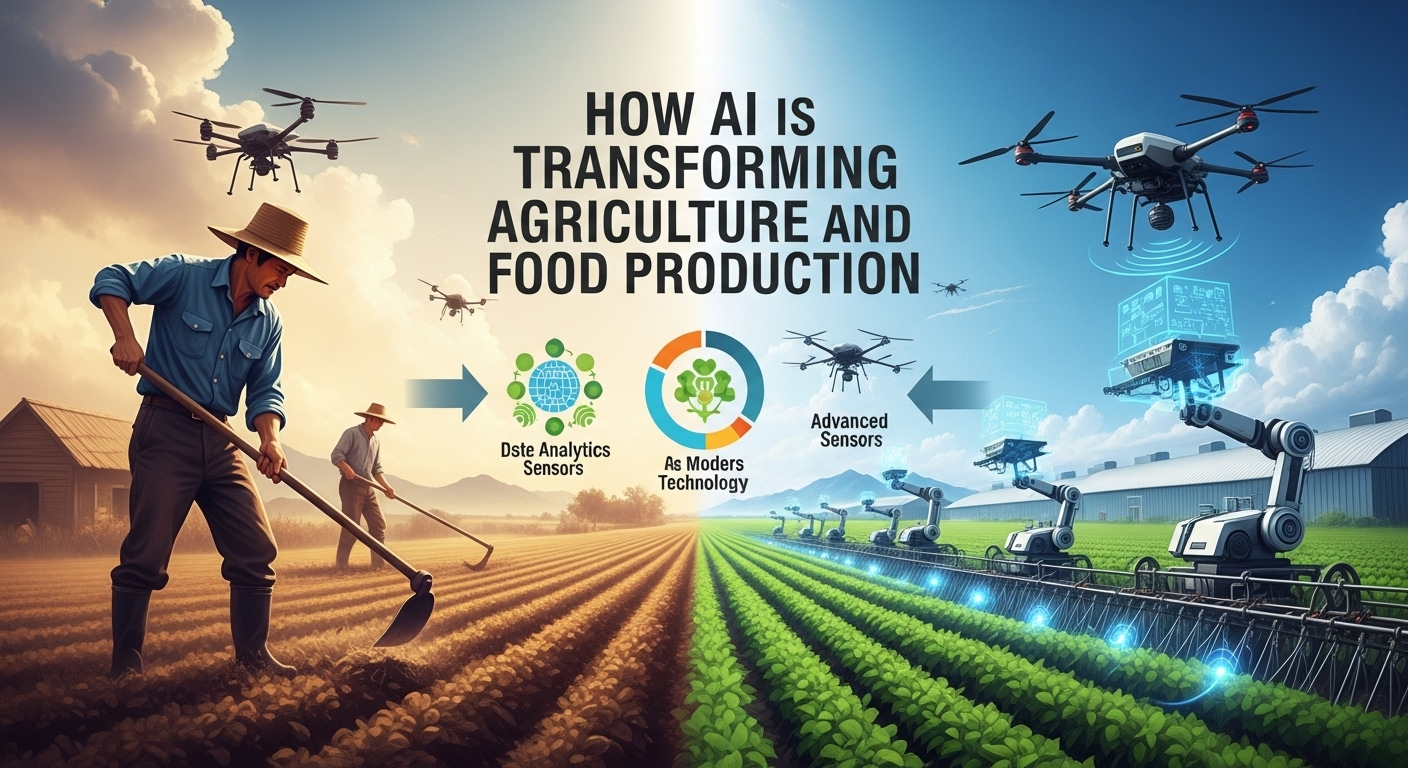
Agriculture is as old as civilization itself, yet it’s undergoing one of its biggest revolutions in history. From sowing seeds to harvesting crops, technology has always played a role in farming. But now, Artificial Intelligence (AI) is stepping in as a powerful force reshaping how we grow food, manage land, monitor crops, and feed the world.
With a rapidly growing global population, climate change, and resource limitations, the farming industry faces enormous challenges. Traditional methods aren’t enough anymore. Enter AI: a technology that’s helping farmers make smarter decisions, increase yields, reduce waste, and improve sustainability like never before.
🌍 The Role of AI in Modern Agriculture
AI in agriculture refers to the application of advanced algorithms and machine learning models to analyze data, predict outcomes, and automate tasks in the farming ecosystem. It empowers farmers with precise information, saving time, effort, and resources.
Key Areas Where AI is Making a Difference:
Precision farming
Crop and soil monitoring
Pest and disease detection
Automated irrigation and fertilization
Weather forecasting and planning
Livestock monitoring
Supply chain optimization
Let’s break each of these down and understand how AI works behind the scenes and how it helps in the real world.
🌿 Precision Farming: Less Guesswork, More Growth
🦄 What is it?
Precision farming involves using AI to analyze data from satellites, drones, sensors, and farm machinery to make farming more accurate and controlled.
👨🌾 Real Example:
A wheat farmer in Australia uses AI-powered software that analyzes satellite images to determine which parts of the field are underperforming. The system then recommends targeted fertilizer applications, increasing yield and saving costs.
🔬 Technology Involved:
Computer vision to analyze drone images
Machine learning to predict crop yields
GPS-guided tractors for accurate planting and spraying
Result: Higher yields, reduced waste, and more sustainable farming.
🌱 Crop and Soil Monitoring: Know Your Land
AI can assess soil health and monitor crop conditions in real-time. Sensors embedded in the soil collect data on moisture, nutrients, and pH levels. AI systems analyze this data and guide farmers on when and how to irrigate or fertilize.
🔜 How it Helps:
Detects nutrient deficiencies
Predicts irrigation needs
Tracks crop growth stages
🙌 Use Case:
In India, AI-powered soil sensors helped farmers reduce water use by 35% during dry seasons by recommending optimized watering schedules.
🐞 Pest and Disease Detection: Fighting the Invisible Enemy
AI systems can detect early signs of crop diseases and pest infestations by analyzing images from drones or mobile apps. Farmers are alerted early, preventing large-scale damage.
🚨 Real Twist:
In Africa, an AI-based app detects signs of fall armyworm infestation on maize leaves using smartphone images. It alerts farmers and suggests organic treatments, saving entire harvests.
🚀 How It Works:
Image recognition algorithms
Neural networks trained on thousands of crop disease images
Impact: Reduced pesticide usage, healthier crops, and more secure food production.
💧 Smart Irrigation and Fertilization
Water is a limited resource. AI helps optimize its use by automatically controlling irrigation based on crop type, weather forecast, and soil data. Fertilization is also done precisely, reducing chemical runoff.
📈 Example:
In California, vineyards use AI systems that monitor weather, plant stress, and moisture levels to control irrigation. Result? 25% less water usage and better grape quality.
☁️ AI in Weather Forecasting and Planning
Weather can make or break a season. AI enhances weather models by analyzing massive datasets, improving short-term and long-term forecasts. Farmers receive alerts for droughts, floods, or frosts in advance.
🌧️ Real-World Impact:
A farmer in Bangladesh avoided major crop losses during monsoon season after receiving AI-driven alerts about heavy rainfall, allowing timely harvesting.
💼 Livestock Monitoring and Management
AI isn’t just for crops. Smart collars and cameras monitor livestock health, detect lameness, and track feeding habits. AI systems alert farmers to abnormalities.
😄 Fun Fact:
Some farms use facial recognition for cows to identify individuals and detect stress levels.
Benefits:
Early illness detection
Improved milk production
Lower veterinary costs
🚶️♂️ Labor and Automation
AI-driven robots are now capable of planting, weeding, and harvesting crops.
✨ Example:
Strawberry-picking robots in Japan use computer vision and robotic arms to pick ripe strawberries without damaging them.
Why It Matters:
Reduces labor shortages
Improves consistency
Works 24/7
🚚 AI in the Supply Chain: From Farm to Fork
AI helps forecast demand, track produce, and optimize routes to reduce spoilage. It also helps with pricing predictions and supply planning.
👥 Use Case:
A supermarket chain in Europe uses AI to predict banana ripeness and adjust supply schedules to minimize waste.
🌎 The Global Impact: Feeding 10 Billion People
By 2050, Earth’s population will hit nearly 10 billion. AI in agriculture could be the key to feeding the world without destroying the planet.
Global Outcomes:
Reduced environmental impact
More efficient food systems
Increased food security
🧳 Real Story:
In Kenya, AI platforms are helping smallholder farmers connect directly with buyers, increasing their profits and reducing post-harvest waste.
⚠️ Challenges and Considerations
High cost of technology for small farmers
Need for training and digital literacy
Data privacy concerns
Dependency on internet and power infrastructure
🙏 Moving Forward:
Governments, NGOs, and tech companies must work together to make AI tools accessible, affordable, and fair for all farmers.
🌟 The Future: Autonomous Farms?
Imagine entire farms run by AI:
Self-driving tractors
AI-driven crop rotation planning
Automatic drone crop spraying
Blockchain-verified produce tracking
It’s already happening on a small scale. The future is closer than we think.
📆 Conclusion: A Harvest of Innovation
AI in agriculture isn’t just about high-tech gadgets. It’s about empowering farmers with insights, protecting the environment, and ensuring a more resilient food system.
As AI continues to evolve, the ancient art of farming is becoming smarter, greener, and more capable of feeding generations to come.
“Technology alone won’t save agriculture, but in the hands of skilled farmers, it becomes a tool of transformation.”
Next time you eat a fresh apple or sip your morning coffee, remember: AI may have helped it reach your table.
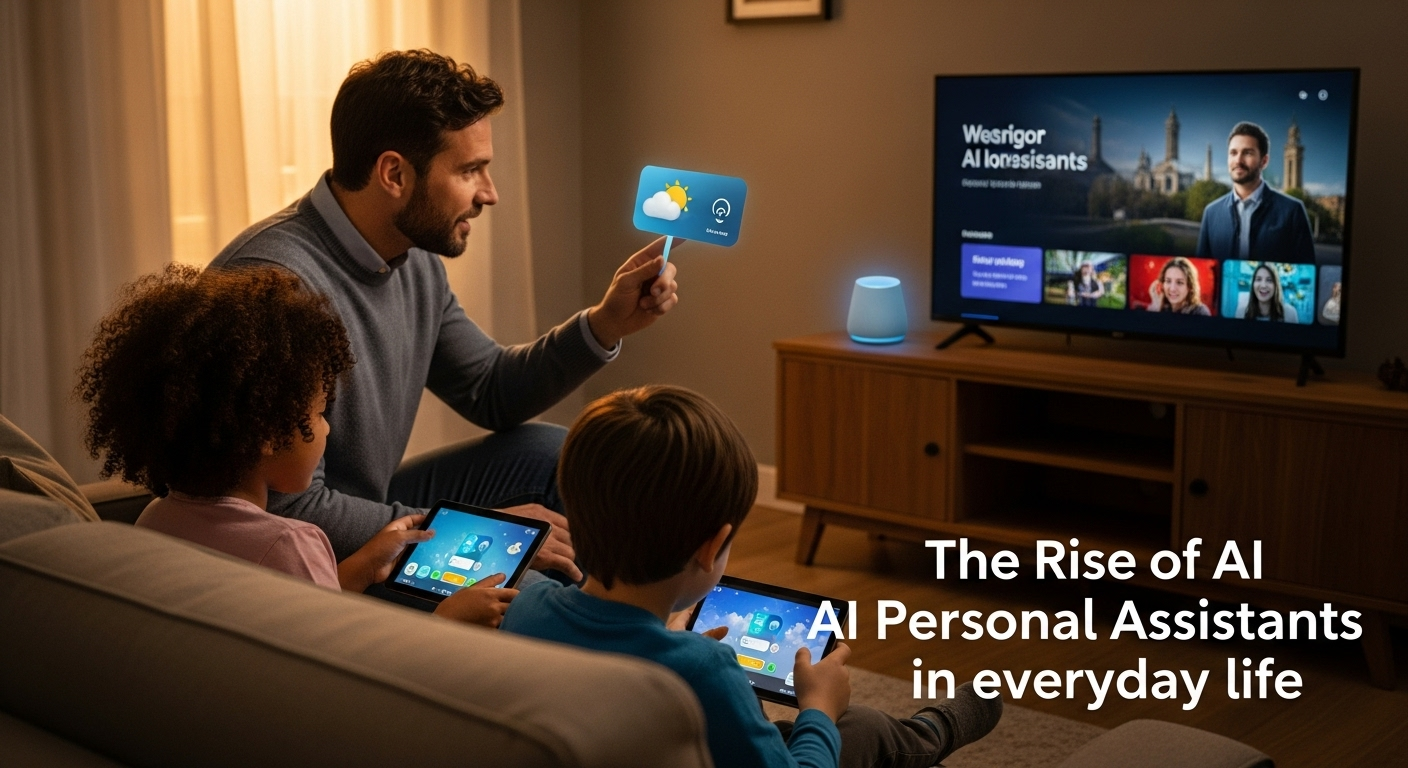
Once, the idea of having a digital assistant who knew your schedule, booked your appointments, reminded you to drink water, and even cracked a joke when you were down was something out of science fiction. Today, thanks to advancements in Artificial Intelligence (AI), these intelligent helpers are not only real but are becoming an integral part of daily life.
AI personal assistants, like Siri, Google Assistant, Alexa, and ChatGPT, have evolved from simple voice command tools into sophisticated systems capable of handling complex tasks, learning from user behavior, and integrating across devices and platforms. But how did we get here, and what does it mean for our future?
📊 What Are AI Personal Assistants?
AI personal assistants are software agents powered by artificial intelligence that can perform tasks or services for individuals. These tasks often include:
Answering questions
Sending messages
Making calls
Setting reminders and alarms
Controlling smart home devices
Searching the web
Providing weather and traffic updates
Booking tickets or appointments
Unlike traditional software, AI assistants use natural language processing (NLP), machine learning (ML), and sometimes deep learning to understand context, learn from interactions, and improve over time.
🏛️ Historical Snapshot
2011: Apple introduces Siri, revolutionizing voice-based interaction.
2014: Amazon launches Alexa with Echo devices, sparking the smart home wave.
2016: Google Assistant debuts, integrating deeply with Android and Google services.
2020s: AI assistants like ChatGPT introduce human-like conversation and multi-turn dialogue capabilities.
🌐 Everyday Uses: Making Life Easier
⏰ Productivity Boost
AI assistants help manage schedules, send reminders, and even summarize emails. For busy professionals, this means less mental load and more focus.
Example: “Hey Google, what’s on my calendar today?” → Lists your meetings, traffic conditions, and even suggests when to leave.
🌞 Smart Home Integration
Controlling lights, thermostats, security systems, and appliances is now a voice command away.
Use Case: Alexa turns on the lights, adjusts the temperature, and plays your morning playlist as you wake up.
🚗 Navigation & Travel
AI assistants provide real-time traffic updates, suggest faster routes, and even book rides or flights.
Example: Siri can estimate travel time and automatically alert contacts if you’re running late.
🍽️ Personal Wellness
Some assistants track hydration, sleep, workouts, and even mental health check-ins.
Twist: An AI assistant reminds a user showing signs of stress (based on tone and behavior) to take a walk or meditate.
🧪 Under the Hood: How Do They Work?
🌐 Natural Language Processing (NLP)
This allows assistants to understand and interpret human language. NLP breaks down sentences into understandable parts and matches them to intents.
Concept: You say, “Remind me to call Mom at 7 PM.” NLP identifies the intent (create reminder), the subject (Mom), and the time (7 PM).
🤖 Machine Learning
AI assistants learn your habits. If you regularly set a reminder to take medicine at 9 PM, it might begin to suggest it automatically.
Concept: Learning occurs through supervised or unsupervised algorithms trained on user data (anonymized and encrypted).
🌎 Cloud Computing & APIs
Most assistants operate in the cloud, enabling them to access vast databases, services (like weather APIs), and stay updated in real-time.
Visual: Think of the assistant as the tip of the iceberg; all the heavy processing happens beneath the surface (in the cloud).
🧰 Real Stories: Changing Lives
🎓 Student Support
Nina, a university student, uses her AI assistant to create flashcards, set study reminders, manage deadlines, and even practice language skills. It helps her stay organized and calm during exam season.
🛌 Elderly Care
John, a 78-year-old retiree, uses Alexa to remind him to take medication, call family, and control his lights and TV without getting up. It’s improved his independence and reduced loneliness.
💳 Financial Savvy
Raj, a freelancer, uses his assistant to track expenses, get real-time currency updates, and even negotiate bills via automated email suggestions.
🕵️ Ethical and Privacy Considerations
With great power comes great responsibility.
⚠️ Data Privacy
AI assistants collect data to personalize experiences. Ensuring transparency, encryption, and user control is critical.
⚖️ Bias & Fairness
Bias in voice recognition (e.g., gender or accent misinterpretation) remains a challenge. Companies are working to make assistants more inclusive.
🧠 Human Dependency
Over-reliance can reduce memory use and decision-making skills. Experts recommend balance: using AI as a tool, not a crutch.
🔬 The Future: What’s Next?
Multimodal Assistants: AI that combines voice, visuals, and text seamlessly.
Emotion Recognition: Assistants that detect mood through voice and respond empathetically.
Personal AI Avatars: Visual interfaces that mimic human-like conversations and facial expressions.
Offline Capabilities: More processing done on-device to reduce cloud dependency and improve privacy.
📆 Final Thoughts: A Helper, Not a Master
AI personal assistants are transforming how we live, work, and connect. They’re not just convenience tools but partners in productivity, wellness, and learning. As the technology advances, the challenge will be to harness these capabilities ethically and responsibly.
“In the future, everyone will have a personal AI coach, friend, and helper. The question isn’t whether we will use AI assistants, but how wisely we do it.”
Have you used an AI assistant today? If not, ask your phone, “What’s the weather like?” and you’ve already taken the first step.
“The best doctor is the one who catches the disease before it begins.” — Modern AI.
💥 The Problem No One Likes Talking About
Healthcare is in crisis — not because of bad doctors or broken systems, but because the human body is complex and time is always against us.
Here’s the harsh truth:
12 million people in the U.S. alone are misdiagnosed every year
Up to 50% of those errors cause serious harm
Diseases like cancer, Alzheimer’s, and heart failure creep in silently
Dr. Elena Marquez from University Medical Center says it best:
“You’re asking the human brain to process millions of data points — fast, accurately, and under pressure. That’s not what the brain was built for.”
But that’s exactly where Artificial Intelligence (AI) shines — it was designed for pattern recognition, fast decisions, and never getting tired.
🧬 The Superpower AI Brings to Diagnosis
Imagine having a partner who:
Can examine thousands of MRI images in seconds
Sees tiny patterns doctors often miss
Compares your history, lab tests, and even genetic markers
Predicts what might go wrong before it happens
That’s what AI does. But let’s stop imagining. Let’s look at how it’s already changing real lives.
🎯 Case Study #1: The Silent Killer Caught
Name: Tariq, 49, non-smoker Symptom: Occasional dry cough Location: Karachi, Pakistan Twist: Routine chest CT flagged by AI as suspicious — doctor missed it initially Outcome: Stage 1 lung cancer removed surgically; prognosis excellent
“I didn’t feel sick. The AI flagged a small nodule that even the radiologist admitted he wouldn’t have caught,” Tariq recalls. “I owe my life to a machine, and I’m okay with that.”
🖼️ Where AI Sees the Unseen
🔍 Pattern Recognition
Detects millimeter-sized nodules in lung scans
Spots changes in brain volume before Alzheimer’s symptoms
Sees lesions on dense breast tissue where mammograms struggle
“AI sees what we miss — not because we’re not good doctors, but because we’re human,” says Dr. James Chen, radiologist.
🧪 Data Fusion: A 360° Patient View
AI pulls data from:
MRI, CT, X-rays
Blood tests and genetic reports
Smartwatch health stats
Patient history
All that’s mixed into one intelligent system that says:
“This woman shows early signs of Parkinson’s, despite her normal test results.”
🧠 Real AI Applications in Different Medical Fields
💓 Cardiology: Predicting the Heart’s Future
Story: An elderly farmer in rural India complained of fatigue. An AI-enhanced ECG revealed hidden signs of heart failure.
💡 AI Outcomes:
85% accurate detection of silent left ventricular dysfunction
Prediction of atrial fibrillation before it occurs
Smart algorithms that analyze ECGs better than some experts
“The AI flagged something we couldn’t explain, but it was right,” said Dr. Sarah Johnson. “The heart was failing before we knew it.”
🧠 Neurology: Decoding the Brain
Twist: Stroke kills 1.9 million neurons per minute. Time is brain.
A 62-year-old man arrived at ER. Normal CT scan. AI flagged signs of ischemia in 12 seconds. Treatment began before human diagnosis.
Also:
AI catches early dementia years before symptoms
Monitors speech patterns to detect cognitive decline
Merges MRI, memory tests, and genes to give Alzheimer’s risk scores
🩺 Oncology: Winning the Cancer Race
In one hospital, AI caught prostate cancer in a 42-year-old man whose initial biopsy was declared benign. On recheck — guided by AI — it was an aggressive tumor.
Cancer Type
Traditional Blind Spot
AI Superpower
Result
Breast
Dense tissue
Pattern beyond human vision
+13% early detection
Lung
Scan overload
Fast nodule recognition
+29% early cancers found
Colorectal
Polyps missed easily
Real-time polyp highlighting
–30% miss rate
Skin
Lack of dermatologists
AI skin analysis via mobile
Early remote detection
👁️ Ophthalmology: The Eyes Reveal All
Case: A woman with no diabetic symptoms had her retina scanned during a check-up. AI found signs of diabetic retinopathy. She began treatment immediately — her vision saved.
AI also detects:
Glaucoma before vision loss
Cardiovascular risks by examining blood vessels in the eye
Early signs of kidney disease
“Your eyes show your whole body’s health. And AI can read them like a book,” says Dr. Maria Lopez.
💡 Twist: What Happens When Doctors Fight the AI?
At a California hospital, an AI flagged a breast lesion as high-risk. The radiologist disagreed. Months later, a second test confirmed — the AI was right.
Dr. Patel explains:
“It’s not about replacing doctors. It’s about letting AI be your second set of eyes — always sharp, always alert.”
🧮 The Numbers Don’t Lie: Real Results
🏥 Metro Hospital Pilot
+23% early cancer detection
17 minutes faster emergency diagnosis
Patient satisfaction up by 12 points
🏞️ Rural Program (12 clinics)
Diabetic eye screening rose from 31% → 89%
Early cancer detection up 34%
Heart conditions detected in 267 symptom-free patients
18% fewer hospitalizations
💰 The Cost Savings Are Massive
Disease
Late Treatment Cost
Early AI Diagnosis
Saved Per Patient
Breast Cancer
$129,000
$35,000
$94,000
Stroke
$140,000
$55,000
$85,000
Blindness from Diabetes
$98,000
$4,500
$93,500
Alzheimer’s (5 yrs)
$287,000
$83,000
$204,000
Multiply those savings by millions of patients worldwide.
⚠️ But There Are Big Challenges…
🚧 Bias in Data
AI for skin cancer worked great — until tested on dark skin tones. Result? 30% drop in accuracy.
Why? It was trained mostly on white skin.
Fix: Diverse training data. Ethical oversight. Transparency.
🧩 Clinical Integration
Doctors don’t want more steps. They want smarter steps.
Best systems:
Plug into existing EHRs
Reduce clicks
Give explainable results
“The best AI system is the one you don’t notice. It’s just there, helping.”
🤖 Human + AI: Better Together
There’s fear that AI will replace doctors. But reality says otherwise.
Collaboration Models:
Second Reader: AI gives a second opinion
Triage: AI helps prioritize who needs urgent care
Real-time Assistant: AI highlights risky areas during procedures
Learning Partner: AI explains its decisions, helping doctors grow
“AI isn’t the hero. It’s the sidekick. Doctors still drive the story.”
🔮 The Future is Even Wilder
🌐 Multimodal AI
Imagine a system that:
Knows your genetic risks
Reads your last 10 years of labs
Watches your smartwatch stats
And says, “You’re on track for a heart issue in 2 years — let’s fix it now.”
📡 Always-On Health Monitoring
Wearables + AI = health status 24/7
AI detects irregular heartbeat in real time
Flags patterns in walking or sleeping before symptoms show
🧠 Explainable AI
Doctors (and patients) want to understand the “why”
Visuals that show why AI flagged a scan
Similar case examples
Confidence levels for predictions
“Trust builds when AI becomes a teacher, not just a black box.”
❤️ Ethics: People First
AI must be transparent, fair, and human-centered.
Guidelines:
Patients must know when AI is used
Consent must be clear
Equity must be ensured
Human judgment must never be sidelined
🧭 Final Word: AI Is the Early Warning System We Always Needed
When Tariq’s cough revealed cancer… When a stroke was treated 17 minutes faster… When a rural clinic saved 267 silent hearts…
That’s not tech hype. That’s real life, powered by artificial intelligence.
“AI gives us a future where healthcare isn’t just about treatment — it’s about prevention, prediction, and precision,” says Dr. Robert Chen.
The future isn’t machines replacing humans. It’s machines making us better humans — with sharper eyes, earlier action, and smarter care.
In today’s competitive business landscape, small businesses face numerous challenges that their larger counterparts can often absorb or overcome through sheer scale. Limited resources, fierce competition, and the constant pressure to do more with less have traditionally put small businesses at a disadvantage. However, a technological revolution is underway that’s rapidly leveling the playing field: Artificial Intelligence (AI).
Once the exclusive domain of tech giants and corporations with deep pockets, AI has become increasingly accessible to small businesses, offering powerful tools that can transform operations, enhance customer experiences, and drive growth. This democratization of AI technology is creating unprecedented opportunities for small businesses to compete and thrive in ways that would have been unimaginable just a few years ago.
The Small Business AI Revolution
The adoption of AI among small businesses has seen remarkable growth in recent years. According to a recent survey by SMB Group, AI adoption among small businesses increased by 37% in 2024 compared to 2022. This surge is largely attributed to the decreasing costs of implementation, with many AI solutions now available through affordable subscription models rather than requiring massive upfront investments.
“We’re seeing a fundamental shift in how accessible these technologies have become,” explains Dr. Maya Rodriguez, small business technology analyst. “What used to require custom development and six-figure budgets can now be implemented through user-friendly platforms at a fraction of the cost.”
This accessibility has democratized several key AI technologies that are particularly relevant to small businesses:
Machine learning algorithms that can analyze customer data and identify patterns
Natural language processing that powers customer service chatbots and sentiment analysis
Computer vision for inventory management and quality control
Predictive analytics for forecasting sales and optimizing operations
The result is nothing short of revolutionary for small business owners who can now access enterprise-grade capabilities without enterprise-level resources.
Key Areas Where AI is Transforming Small Business Operations
Customer Service and Engagement
Perhaps the most visible impact of AI on small businesses is in customer service and engagement. AI-powered chatbots and virtual assistants are enabling small businesses to provide 24/7 customer support without the need for round-the-clock staffing.
Take the case of Riverfront Books, an independent bookstore in Portland that implemented an AI chatbot on their website. “Before the chatbot, we were missing customer inquiries that came in after hours or when we were too busy during peak times,” explains owner Sarah Chen. “Now our AI assistant handles basic questions, processes simple orders, and makes recommendations at any hour. Our customer satisfaction scores have increased by 42%, and we’ve seen a 28% increase in online sales.”
The chatbot workflow typically follows this pattern:
Customer initiates conversation with a question
AI analyzes the query using natural language processing
Bot provides relevant response or collects order information
For complex issues, the system flags for human follow-up
All interactions are logged for continuous improvement
Beyond chatbots, AI is transforming how small businesses understand their customers through personalized marketing and sentiment analysis. By analyzing customer interactions across social media, reviews, and direct communications, AI tools can help small businesses gauge customer sentiment and identify trends that would be impossible to spot manually.
Traditional Customer Service
AI-Enhanced Customer Service
Limited to business hours
24/7 availability
Inconsistent responses
Standardized, accurate information
Long wait times during busy periods
Instant responses regardless of volume
Limited customer insights
Deep analysis of customer preferences
Reactive problem solving
Proactive engagement based on patterns
Financial Management and Forecasting
For many small business owners, financial management represents one of the most challenging and time-consuming aspects of running their business. AI is changing this dynamic by automating bookkeeping tasks, improving cash flow prediction, and enhancing fraud detection.
AI-powered bookkeeping solutions can now automatically categorize expenses, reconcile accounts, and flag discrepancies. This not only saves time but also reduces errors that can be costly for small businesses operating on tight margins.
“I used to spend every Sunday afternoon doing bookkeeping,” says Miguel Sanchez, owner of Coastal Cleaning Services. “Now my AI accounting system categorizes transactions automatically and even learns from my corrections. It’s given me back about 15 hours a month that I can spend with my family or working on growing the business.”
Cash flow prediction, a critical concern for small businesses, has also been transformed by AI. By analyzing historical data, seasonal trends, and even external factors like weather patterns or local events, AI systems can provide remarkably accurate cash flow forecasts that help business owners make better decisions about inventory purchases, staffing, and investments.
Perhaps most importantly, AI-powered fraud detection systems are now accessible to small businesses, providing a level of security previously available only to larger organizations. These systems can identify unusual transaction patterns and flag potential fraud before it causes significant damage.
Inventory and Supply Chain Management
Inventory management represents another area where AI is creating significant advantages for small businesses. The traditional challenges of maintaining optimal inventory levels—avoiding both stockouts and excess inventory—are being addressed through sophisticated AI algorithms.
AI-powered inventory management systems can:
Predict demand based on historical data, seasonal trends, and external factors
Automatically generate purchase orders when inventory reaches reorder points
Optimize warehouse organization for efficient picking and packing
Identify slow-moving items that tie up capital
For restaurants and food-related businesses, AI is proving particularly valuable in reducing food waste. Farm to Table Café, a small restaurant in Austin, implemented an AI inventory system that reduced their food waste by 32% in the first three months.
“The system predicts our ingredient needs with remarkable accuracy,” explains chef and owner Damon Williams. “It considers factors like weather forecasts, local events, and even social media buzz about certain dishes. We’re saving money and reducing our environmental impact at the same time.”
The supply chain disruptions of recent years have highlighted the importance of resilient supplier relationships. AI tools are helping small businesses optimize these relationships by analyzing supplier performance, identifying risks, and even suggesting alternative suppliers when problems arise.
Marketing and Sales Optimization
Marketing represents another area where AI is leveling the playing field for small businesses. Traditionally, sophisticated marketing campaigns required either significant in-house expertise or expensive agency relationships. Today, AI-powered marketing tools are enabling small businesses to create targeted, effective campaigns with minimal expertise.
AI content creation tools can now generate blog posts, social media content, and even basic marketing copy that rivals human-created content. While these tools work best with human oversight and editing, they dramatically reduce the time required to maintain an active content marketing presence.
Customer targeting and segmentation, once the domain of marketing specialists, can now be handled by AI systems that analyze customer data to identify distinct segments and create personalized marketing approaches for each.
Five AI marketing tools that are particularly affordable and effective for small businesses include:
ContentBot – AI-powered content creation and optimization
PredictiveAudience – Customer segmentation and targeting
SmartSocial – Automated social media management with AI-driven scheduling
EmailGenius – AI-enhanced email marketing with personalization
AdOptimizer – Automated optimization of digital advertising campaigns
Local service businesses are finding particular value in AI-powered marketing. Sunshine Plumbing, a small plumbing company in Florida, implemented an AI marketing system that analyzes service history, customer demographics, and even weather patterns to target their advertising.
“We used to send the same promotions to everyone in our database,” explains owner Frank Rodriguez. “Now our system knows which customers are likely to need seasonal maintenance, who might be interested in water conservation solutions, and even which neighborhoods have aging infrastructure that could lead to emergency calls. Our marketing ROI has tripled.”
Implementation Strategies for Small Businesses
While the benefits of AI for small businesses are clear, implementation can seem daunting. The most successful approaches typically follow these principles:
Starting Small with Ready-to-Use AI Solutions
Rather than attempting a comprehensive AI transformation, successful small businesses typically start with a single, well-defined use case that addresses a clear pain point. Cloud-based, software-as-a-service (SaaS) AI solutions offer the easiest entry point, requiring minimal technical expertise to implement.
“We recommend that small businesses begin with either a customer-facing application like a chatbot or an internal efficiency tool like automated bookkeeping,” advises technology consultant Priya Sharma. “These applications typically show quick returns and build confidence for further AI adoption.”
Identifying the Highest-Impact Areas for Your Business
Not all AI applications will deliver equal value for every business. Small business owners should consider these questions when evaluating potential AI implementations:
Which operational tasks consume the most time with the least strategic value?
Where do errors or inconsistencies most frequently occur?
Which areas of the business generate the most customer complaints or friction?
What information would most improve decision-making if it were readily available?
The answers to these questions can help identify the highest-impact areas for AI implementation.
Cost-Benefit Analysis Framework
When evaluating AI solutions, small businesses should consider both quantitative and qualitative factors:
Reduced stress and cognitive load for owners/employees
Increased capacity for strategic work
Better work-life balance
Overcoming Implementation Challenges
Despite the increasing accessibility of AI, small businesses still face challenges in implementation. Understanding these challenges and their solutions can smooth the path to successful adoption.
Addressing Data Limitations
AI systems require data to function effectively, and many small businesses worry that they lack sufficient data for AI to be useful. However, many modern AI solutions are designed to work with limited data or can leverage industry data to supplement a business’s own information.
“Even a small business with a few hundred customers has valuable data that can power AI insights,” explains data scientist Marcus Johnson. “And many AI systems now come pre-trained on industry data, requiring only minimal customization to deliver value.”
For businesses with data quality issues, AI implementation often becomes an opportunity to improve data collection and management practices, creating additional long-term benefits.
Training Staff and Managing Change
Resistance to new technology is natural, particularly when it involves significant changes to established workflows. Successful AI implementations typically involve:
Clear communication about how AI will support (not replace) employees
Hands-on training that demonstrates immediate benefits
Identification of “champions” who can support their peers
Gradual implementation that allows for adjustment periods
Small manufacturing company Precision Parts experienced initial resistance when implementing an AI quality control system. “Our inspectors saw it as a threat to their jobs,” recalls operations manager Tanya Williams. “We shifted our approach to position the AI as their assistant, handling routine checks while freeing them for more complex quality issues. Within a month, they were suggesting new ways to use the system.”
Privacy and Security Considerations
Small businesses must also address privacy and security concerns when implementing AI. Customer data protection, compliance with regulations like GDPR or CCPA, and securing AI systems against potential breaches are all important considerations.
Common Challenge
Solution Approach
Limited technical expertise
Choose user-friendly, well-supported AI platforms
Data quality issues
Start with data cleaning and organization before implementation
Employee resistance
Focus on how AI handles tedious tasks and enhances capabilities
Budget constraints
Begin with high-ROI applications and reinvest savings
Privacy concerns
Select vendors with strong security credentials and transparent policies
Measuring ROI from AI Investments
To ensure AI investments deliver value, small businesses should establish clear metrics for success before implementation. These metrics will vary based on the specific application but might include:
Key Performance Indicators to Track
Time saved on administrative tasks
Reduction in error rates
Customer satisfaction scores
Response time improvements
Sales conversion rate changes
Inventory carrying cost reduction
Marketing campaign performance
“The most successful small business AI implementations I’ve seen all started with clear, measurable objectives,” notes business advisor James Chen. “This not only helps justify the investment but also guides ongoing refinement of the AI systems.”
Timeframes for Expecting Results
Small businesses should understand that while some AI benefits appear quickly, others take time to materialize:
Immediate benefits (1-3 months): Automation of routine tasks, basic chatbot functionality, initial insights from data analysis
AI systems improve over time as they process more data and receive feedback. Small businesses should establish processes for regularly reviewing AI performance and providing feedback to improve results.
Essential metrics for different types of AI implementations include:
Customer service AI: Response time, resolution rate, customer satisfaction, escalation frequency
As AI technology continues to evolve, several emerging trends will create new opportunities for small businesses:
Emerging AI Technologies Relevant to Small Businesses
The next wave of AI advancements will make these technologies even more powerful and accessible for small businesses:
Generative AI will enable even more sophisticated content creation, design work, and product development
Edge AI will bring intelligence to devices without requiring cloud connectivity, enhancing privacy and reducing costs
Voice commerce will create new customer interaction channels
Hyper-personalization will enable even small businesses to create individualized customer experiences
Predictions for Cost and Accessibility Improvements
Industry analysts predict that AI implementation costs will continue to decrease by approximately 20-30% annually for the next several years, while capabilities increase. This trend will make sophisticated AI capabilities accessible to even the smallest businesses.
“We’re approaching a point where AI will be as fundamental to business operations as having a website or email,” predicts technology futurist Dr. Alisha Patel. “The businesses that adapt early will have significant advantages in efficiency, customer experience, and innovation capacity.”
How Small Businesses Can Prepare for Future AI Developments
To position themselves for future AI opportunities, small businesses should:
Improve data collection and organization practices
Develop basic AI literacy among all staff
Experiment with current AI tools to build familiarity
Stay informed about emerging applications in their industry
Consider AI capabilities when making other technology investments
Conclusion
The AI revolution is fundamentally changing what’s possible for small businesses. By automating routine tasks, enhancing decision-making, and enabling personalized customer experiences, AI is helping small businesses overcome traditional limitations and compete more effectively.
While implementation challenges exist, they are increasingly surmountable with proper planning and a strategic approach. The small businesses that embrace AI now will not only improve their current operations but also position themselves for future opportunities as these technologies continue to evolve.
For small business owners, the message is clear: AI is no longer optional for those who wish to remain competitive. By starting with high-impact applications, measuring results, and building on successes, small businesses can harness the power of AI to transform their operations and secure their place in the future business landscape.
Additional Resources
Recommended AI Platforms for Small Businesses
Zoho One – Comprehensive business suite with integrated AI capabilities
HubSpot – Marketing, sales, and service platform with AI features
QuickBooks with AI – Financial management with intelligent automation
Shopify Kit – AI marketing assistant for e-commerce
Trello with AI – Project management with intelligent automation
Educational Resources for Learning More About Business AI
Small Business Administration’s AI Resource Center (sba.gov/ai)
Google’s “AI for Small Business” free online course
Microsoft’s Small Business AI Toolkit
“AI for Everyone” course by Andrew Ng on Coursera
Small Business AI Alliance webinars and resources
Communities and Forums for Small Business AI Users
Small Business AI Network (smallbusinessai.network)
ChatGPT can generate a wide variety of images using descriptive prompts. Here’s a breakdown of the types of images it can create and sample prompts for each type.
🔹 1. Realistic Photos / Photo-Realistic
These images look like they were taken with a real camera.
Prompts:
“A photo of a young woman standing in Times Square at night, city lights glowing behind her, taken with a DSLR camera.”
“A realistic photo of an African elephant walking through a savannah at sunset.”
“A 1970s-style photo of a family sitting around the dinner table.”
🔹 2. Cartoons / Comics / Anime Style
Fun, colorful, and stylized like illustrations or animation.
Prompts:
“A cartoon of a cat working at a laptop in a coffee shop.”
“A comic book style superhero flying over a futuristic city.”
“An anime-style girl standing under cherry blossom trees.”
🔹 3. Fantasy / Sci-Fi
Creatures, landscapes, or objects that don’t exist in real life.
Prompts:
“A dragon perched on a snowy mountain with glowing eyes and blue scales.”
“A sci-fi city on Mars with flying cars and glowing towers, night scene.”
“A portal opening in the middle of a forest, with glowing runes around it.”
🔹 4. Concept Art / Game Design / Character Design
Useful for artists, designers, or developers.
Prompts:
“Character concept of a female pirate with steampunk accessories.”
“Weapon design: futuristic plasma sword with blue energy core.”
“Environment concept art of a desert temple ruins under a stormy sky.”
🔹 5. 3D Render / Isometric Art
Rendered objects or scenes that look like they’re made in 3D.
Prompts:
“A 3D render of a luxury modern kitchen with marble countertops.”
“Isometric view of a medieval blacksmith’s workshop.”
“Low-poly 3D art of a fantasy island floating in the sky.”
🔹 6. Architecture / Interior Design
Buildings, rooms, and furniture layouts.
Prompts:
“Interior design of a minimalist Scandinavian living room.”
“A luxury villa with a pool on a cliffside in Bali, sunrise view.”
“Futuristic architecture of a tech company HQ in 2040.”
🔹 7. Logos / Icons / UI Concepts
Simple, graphic images for branding or apps.
Prompts:
“Flat icon of a rocket ship for a mobile app.”
“Minimalist logo design for a coffee shop called ‘Bean & Brew’.”
“UI mockup of a dark-themed music player app screen.”
🔹 8. Nature / Landscapes
Scenes from the natural world.
Prompts:
“A peaceful mountain landscape with pine trees and a flowing river.”
“A dense jungle with mist and early morning light filtering through.”
“A winter landscape with a frozen lake and snow-covered trees.”
🔹 9. Historical / Vintage
Old-style or retro images.
Prompts:
“A Victorian-era street with horse carriages and gas lamps.”
“1950s American diner with neon signs and vintage cars outside.”
“Ancient Roman market scene with togas and marble columns.”
🔹 10. Abstract / Artistic / Surreal
Creative and imaginative art, dreamlike or strange.
Prompts:
“Surreal painting of a whale flying in the sky with clouds shaped like boats.”
“Abstract geometric art with vibrant neon colors and fractal patterns.”
“Digital art of time melting like Salvador Dali’s clocks.”
🔹 11. Posters / Book Covers / Album Art
Designed to look like media covers.
Prompts:
“A thriller novel cover with a dark forest and a silhouette of a man holding a flashlight.”
“A vintage travel poster for Tokyo in the 1960s.”
“Psychedelic album cover art with swirling colors and outer space elements.”
🔹 12. Infographics / Diagrams (Simple or Illustrated)
Educational or informative visuals.
Prompts:
“An illustrated diagram showing how a solar eclipse works, for children.”
“Flat design infographic explaining how the heart pumps blood.”
“Step-by-step image showing how to make a cup of coffee.”
🧠 Tips for Writing Image Prompts:
Be descriptive: mention colors, style, camera type, mood, lighting, etc.
Use keywords: “realistic,” “3D render,” “digital painting,” “comic style,” etc.
Add details like weather, time of day, pose, background.
You can even say “in the style of [artist]” like “in the style of Van Gogh.”
Would you like me to generate a custom image based on your own idea or project?
Empowering Minds with the Latest in Technology, AI, and Computer Science