All posts by hannanmentor@gmail.com

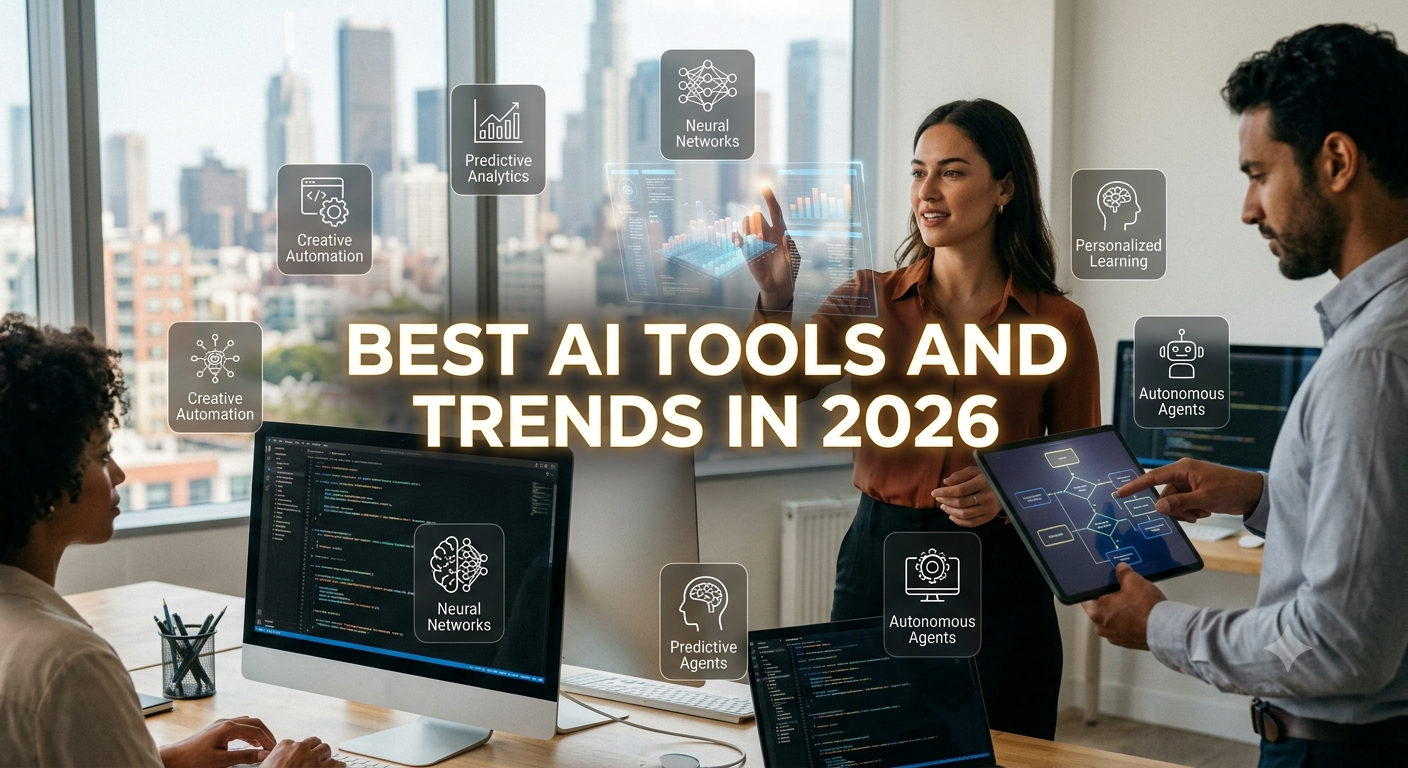
Best AI Tools and Trends in 2026

Best AI Tools and Trends in 2026: The Complete Guide for Work, SEO, Coding, and Business

Table of Contents

  1. Key Takeaways for AI in 2026
  2. Why AI Tools are Exploding in 2026: Productivity vs. Experimentation
  3. Top AI Trends of 2026: The Age of Agents
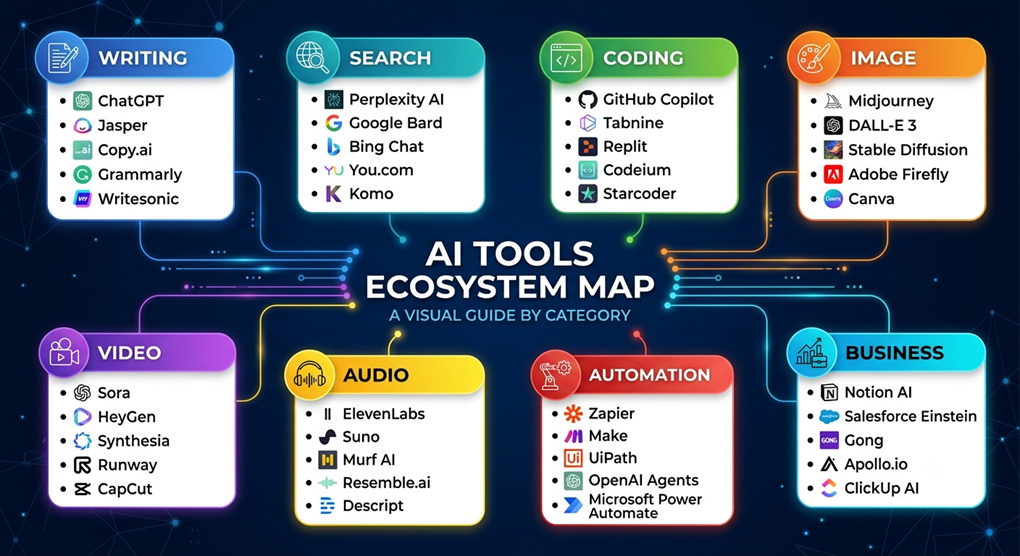
  4. Best AI Tools by Category: From Creative to Code
  5. AI Tool Comparison Table
  6. Strategic Use Case: Best AI for Bloggers and SEO
  7. Best AI Tools for Business Operations
  8. Best AI Tools for Creators and Digital Media
  9. Best AI Tools for Developers
  10. Strategic Decision Framework: How to Choose Your Stack
  11. Common AI Adoption Mistakes
  12. Future Predictions
  13. FAQs: All Your AI Questions Answered
  14. Final Verdict

1. Agentic AI and Autonomous Agents

Agentic AI is the defining trend of 2026. A prompt no longer generates only an answer; it initializes a workflow. AI agents can break a high-level goal into a plan, execute the steps (such as researching, writing, generating an image, and updating a database), verify the output, and complete the process autonomously with defined human review points. Example: An agent that monitors compliance might read a regulation, audit company documents, draft revisions, notify the legal team, and file the update.

2. Conversational Search and Answer Engines

SEO is evolving into AIO (AI Optimization). Search is no longer about keywords and ten blue links; tools like Perplexity, ChatGPT search integrations, and Google AI Overviews provide synthetic, summarized answers derived directly from verified sources. Visibility now requires structured data and authoritative, expert-led content that AI engines trust and cite.

3. Native Multimodality

Multimodal AI is now native and mainstream across all major models. Tools possess simultaneous input/output awareness for text, image, audio, high-definition video, complex data files, diagrams, live screenshots, and codebases.

4. AI Video Generation

AI video has matured into a standard asset in marketing and production. Creators can generate short, photorealistic clips, specific product scenes, social advertisements, visual concepts, and explainer segments significantly faster and cheaper than traditional production.

5. Deep Coding Assistants

AI coding tools have moved beyond autocomplete. Tools like Cursor are AI-first code editors that understand the context of an entire codebase, suggesting refactors, writing comprehensive tests, explaining complex errors, and generating entire features, allowing developers to move from writing code to engineering systems.

6. Intelligent Workflow Automation

Automation (Zapier, n8n) is no longer rigid logic rules. With integrated AI, automation now handles dynamic tasks: categorization, sentiment analysis, intelligent summarizing, and complex decision-making within pipelines.

7. Private and On-Device AI

Privacy is a top trend for 2026. For speed and security, many enterprise and consumer applications now run smaller, powerful language models locally on consumer hardware (laptops, phones) rather than sending sensitive data to the cloud.

8. AI Governance and Compliance

For enterprise users, AI tools are now standardized with comprehensive governance protocols, security audits, transparent audit logs, and clear cost-control mechanisms essential for regulatory compliance.

9. AI for AIO (AI Optimization) and Content Operations

AI is no longer just a draft generator. It is the core of content operations, automating content planning, deep SERP analysis, semantic clustering, content refreshing, and omnichannel distribution strategies.

10. The AI Personal Productivity Stack

Users are abandoning the “one model to rule them all” philosophy. The default in 2026 is building a curated stack of specialized, interconnected AI tools, optimizing individual parts of your workflow rather than relying on a single generalist tool.

Best Foundational AI Assistants

  • ChatGPT (OpenAI): The most versatile generalist tool for writing, brainstorming, workflow management, and multimodal analysis.
  • Claude (Anthropic): The top choice for long-form, complex reasoning, structured writing, and large context handling, often favored for corporate data tasks.
  • Gemini (Google): The deepest integration for Google Workspace users and superior handling of native multimodal tasks involving live data and files.

Search & Research Engines

  • Perplexity: The unrivaled best for verifiable research, providing fast, referenced citations from diverse, live sources.
  • Google AI Search Experience / Copilot: Important general consumer examples that define current search behavior.

Coding Ecosystems

  • Cursor: The first truly AI-native code editor (IDE), designed to work within your actual codebase for complex analysis and feature generation.
  • GitHub Copilot: The most powerful completion and suggestions engine, maximizing productivity across varied coding environments.

Image & Art Tools

  • Midjourney: The highest aesthetic quality and consistent creative image generation, essential for design concepts and high-end visuals.
  • Flux (and derivative apps): The leading flexible, open-weight image model, dominating varied applications for flexible image generation.

Video Production Tools

  • Runway: The industry leader for multimodal scene editing, motion control, and professional, reliable video generation.
  • Pika / Sora (OpenAI): Strong competitors that excel at short, creative clips and experimental visual concepts.

Audio & Voice Tools

  • ElevenLabs: The absolute best for natural voice generation, professional narration, translation, and high-fidelity dubbing.

Design Platforms

  • Canva AI (Magic Studio): The most user-friendly ecosystem for generating rapid social graphics, presentations, brand assets, and marketing materials with AI.

Productivity Tools

  • Notion AI: Top tool for general productivity, turning extensive notes and documents into synthesis, knowledge hubs, and automated workflows.
  • Microsoft Copilot: The leading integration for Microsoft 365 users, directly automating workflows within Word, Excel, and Outlook.

Automation Platforms

  • Zapier: The no-code leader, leveraging AI for intelligent classification and connecting thousands of app ecosystems.
  • n8n: A flexible, powerful, often self-hosted alternative favored by developers and technical teams for deep, complex workflow orchestration.

ToolPrimary CategoryBest ForTop StrengthKey Caveat
ChatGPTGeneral AI AssistantMultimodal ProductivityVersatility & Large EcosystemMust rigorously fact-check
ClaudeAdvanced ReasoningStructured Writing/EditingLogic, Tone, & Long ContextTool integrations vary
PerplexityAI Research/SearchVerifiable deep researchSpeed, Accuracy & Citations*Must review *quality* of sources*
CursorAI Coding (IDE)Codebase-wide EngineeringAI-First Codebase AwarenessRequires coding proficiency
MidjourneyAI Image GenerationProfessional visual conceptsCreative Aesthetic QualitySignificant prompt skill needed
RunwayAI Video GenerationProfessional short video asset creationDeep multimodal scene controlSignificant cost at production scale
ZapierWorkflow AutomationIntelligent No-Code pipelinesMassive 6,000+ App EcosystemCan accumulate high costs

Autonomous Process Agents

In 2026, corporate competitive advantage is derived from internal process efficiency. Businesses leverage AI Process Agents integrated directly into ERP, CRM, and financial systems to autonomously manage logistics, predictive inventory, complex financial forecasting, and sentiment-driven customer support management.

  • Process Agents: Often custom-built, proprietary systems leveraging platforms like Google Cloud’s Agentic enterprise architecture.
  • SaaS-Native AI: AI Process Agents integrated directly into enterprise software (Salesforce Einstein, SAP AI).

Intelligent Corporate Communications

Beyond email, businesses use AI-integrated meeting platforms (Zoom AI, Microsoft Teams AI) that do not just summarize, but analyze sentiment, track commitments, and automatically update project management pipelines following meetings.

Synthetic Studios

Creators are moving from manual editing to directing Synthetic Studios. Text-to-Video and Motion-to-Video systems like Runway and Sora generate photorealistic B-roll, product scenes, visual effects, and complex storyboards, fundamentally restructuring production costs.

  • Production: Runway, Sora, Luma AI (text/video-to-3D).
  • Voiceover & Translation: ElevenLabs dominates professional narration and natural dubbing/translation pipelines.

Autonomous Systems Engineering

The paradigm shift for developers in 2026 is moving from coding to systems engineering. AI coding assistants are no longer external tools; they are integrated into AI-native environments that possess deep, structural understanding of massive codebases. They find bugs, analyze security vulnerabilities, recommend refactors, write tests for existing logic, and can generate entire functional features.

  • IDE (Environment): Cursor is the defining tool.
  • Copilots: GitHub Copilot, Tabnine (for enterprise security/hosting).

The smartest users in 2026 do not adopt every tool. They follow a defined decision framework to maximize ROI and avoid tool overload:

Integrated “OS Agents”

We will see OS Agents integrated directly into personal and business operating systems (Apple Intelligence, Microsoft Copilot on Windows). These agents will connect foundational models directly to your local file systems, application usage, and operational history, allowing personalized, secure, on-device automation.

Vertical Specialization Overdose

General-purpose LLMs are saturating. The market of late 2026 will be defined by highly specialized Vertical AI Tools trained on massive, proprietary datasets for specific legal, medical, engineering, and scientific fields.

Crucial Best Practices

  • Draft-Only Directive: Treat all AI outputs as high-quality drafts, not definitive truth. Your expertise, verification, and unique insight provide the final value.
  • Verify Everything (Zero-Trust): Build multi-step verification workflows. Never trust a single AI-generated data point or citation without secondary verification.
  • Originality still matters: In an AI-saturated market, your human experience, authentic voice, unique case studies, and lived insights are more valuable than ever. This content cannot be generated.
  • Ecosystem Integration over Isolation: Prioritize tools that seamlessly connect via API to your automation platforms (Zapier/n8n) and your database ecosystems.

Frequently Asked Questions (FAQs)

Q: Which are the best AI tools in 2026?

A: There is no single “best” tool. Success requires curating a dynamic stack including foundational models (ChatGPT, Claude, Gemini), deep research engines (Perplexity), special tools (like Cursor for code, Midjourney for images, Runway for video, Canva for design, Notion for productivity, ElevenLabs for audio), and integration platforms (Zapier / n8n).

Q: What is the single biggest AI trend in 2026?

A: The defining trend is Agentic AI proactive AI systems (AI Agents) that move beyond synthesis to autonomously planning, executing, and validating complex multi-step workflows.

Q: How has AI changed SEO (Search Engine Optimization) in 2026?

A: SEO traditional has evolved into AIO (AI Optimization). Search results are conversational answer synthesis (like Perplexity and Google Overviews), derived from trusted sources. Visibility now requires structured data and expert-verified, authoritative, schema-compliant content.
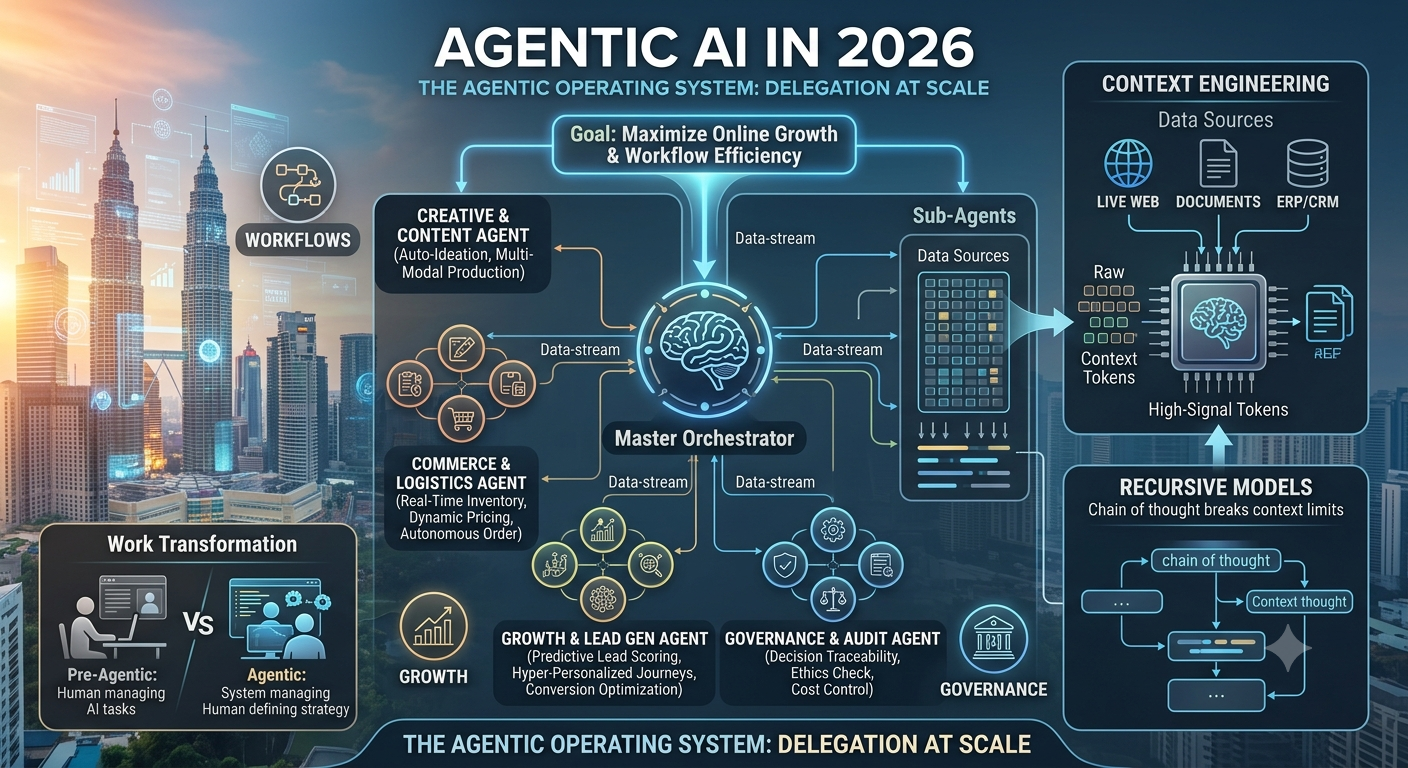
Agentic AI in 2026: The Viral AI Trend Changing Work and Online Growth

Artificial intelligence is no longer only about chatbots that answer questions. The biggest AI trend right now is agentic AI: AI systems that can plan, take action, use tools, remember context, and complete multi-step tasks with less human input.

In simple terms, agentic AI is the shift from “AI that replies” to “AI that does.” Instead of asking an AI tool to write one email, you can ask an AI agent to research a customer, draft the email, schedule the follow-up, update your CRM, and summarize the result.

If you already read about AI tools for productivity or generative AI for business, agentic AI is the next level because it connects ideas with real action.

What Is Agentic AI?

Agentic AI refers to AI systems designed to work toward a goal. These systems can break a task into steps, choose tools, analyze results, and continue working until they complete the objective.

A normal AI chatbot might answer: “Here is a marketing plan.” An AI agent can potentially research your niche, analyze competitors, create a content calendar, draft posts, generate image prompts, and prepare email campaigns.

The key difference is action.

FeatureTraditional/Gen AI (Pre-2026)Agentic AI (2026)
AutonomyReactive: waits for the next prompt.Proactive: sets goals and executes plans.
WorkflowShort interactions, single tasks.Delegated, long-horizon, multi-step workflows.
ContextShort context windows, frequent hallucinations.Deep context, recursive models, verifiability audits.
CoordinationHuman-led: you prompt, you manage.Multi-agent: agents manage other agents and coordinate actions.
ImpactTask automation, creativity boost.End-to-end process automation, decision-making, strategic growth.

Agentic AI is going viral because it connects directly to what people and companies want most: speed, productivity, and scale.

1. It Saves Time

AI agents can handle repetitive digital work such as research, writing drafts, organizing files, summarizing meetings, and preparing reports. This helps individuals and teams focus on strategy, creativity, and decision-making.

2. It Makes AI More Useful

Generative AI was impressive because it created text, images, code, and ideas. Agentic AI goes further by connecting generation with execution. That makes AI more practical for real workflows.

3. It Supports Business Growth

Small businesses, bloggers, freelancers, and startups can use AI agents to perform tasks that once required large teams. This includes customer support, lead generation, content planning, SEO research, and social media management.

4. It Changes the Future of Work

The workplace is moving from manual task completion to AI-assisted orchestration. People who learn how to direct AI agents may become more productive than those who only use basic tools.

How Agentic AI is Changing Work?

The most noticeable impact is on the ‘operational grind.’ Agentic AI scales in ways humans cannot, adapting to context rather than waiting for a rigid playbook. This offloads the high-volume, low-judgment decisions that slow down teams, enabling employees to focus on strategic work that requires empathy, nuance, and collective expertise.

Key transformation areas include:

  1. Autonomous Workflow Orchestration: Complex, cross-functional processes that once took weeks can be delegated to a team of agents. An agent can research a topic, another draft a proposal, a third audit it for compliance, and a fourth publish it and track its performance, all without human intervention.
  2. Vertical AI Agents: Instead of general-purpose tools, specialized agents dominate industries. We see vertical agents in Healthcare (monitoring real-time vitals and suggesting active interventions), Manufacturing (moving from predictive maintenance to autonomous repair), and Software Development (where agents handle 99% of code generation in many teams).
  3. End-to-End Document Processing: Beyond reading text, agents can autonomously pull data from invoices, compare it against internal records, route exceptions to a human, and update ERP and CRM tools automatically.

Real-World Uses of Agentic AI

Agentic AI is already useful across many industries. Here are some high-impact examples:

  • Content creation: Research trending topics, build outlines, draft blog posts, generate social captions, and repurpose long-form content.
  • SEO: Find keyword opportunities, analyze competitors, suggest internal links, create metadata, and update old articles.
  • Customer support: Answer common questions, route complex tickets, summarize conversations, and suggest next actions.
  • Sales: Research prospects, personalize outreach, schedule follow-ups, and update pipeline notes.
  • Software development: Review code, write tests, explain bugs, update documentation, and automate repetitive engineering tasks.
  • Education: Create study plans, explain lessons, generate quizzes, and personalize learning paths.
  • Research: Summarize papers, compare sources, extract key points, and organize references.

How Bloggers and Website Owners Can Use Agentic AI

If you run a website, agentic AI can become your growth assistant. Here is a practical workflow:

  1. Ask an AI agent to identify trending questions in your niche.
  2. Turn those questions into SEO-friendly blog titles.
  3. Create outlines based on search intent.
  4. Draft content with clear headings and examples.
  5. Generate meta titles, meta descriptions, and FAQ sections.
  6. Repurpose the article into LinkedIn posts, X threads, short video scripts, and email newsletters.
  7. Track performance and update the article when rankings change.

For website owners, this connects perfectly with SEO automationcontent marketing trends, and future of work topics.

Agentic AI vs Generative AI

Generative AI creates content. Agentic AI uses AI capabilities to complete tasks. That means generative AI can write a blog introduction, while agentic AI can plan the article, research keywords, draft the content, suggest links, prepare social posts, and help update the page later.

This is why many technology companies and researchers are focused on AI agents. For deeper reading, you can explore IBM’s explanation of agentic AINVIDIA’s agentic AI overview, and Microsoft’s Work Trend Index.

SEO Strategy for Agentic AI Content

To rank for agentic AI, target both broad and long-tail keywords. Broad keywords bring visibility, while long-tail keywords attract readers who are closer to taking action.

  • agentic AI
  • what is agentic AI
  • AI agents explained
  • autonomous AI agents
  • best AI agents for business
  • agentic AI examples
  • generative AI vs agentic AI
  • AI trends 2026
  • how AI agents improve productivity

The Risks of Agentic AI

Agentic AI is powerful, but it must be used carefully.

The biggest risks include incorrect outputs, data privacy issues, over-automation, weak human oversight, and security problems when AI agents connect to sensitive tools.

Before using AI agents for business-critical tasks, set clear rules. Review outputs, protect private data, limit tool permissions, and keep humans involved in important decisions. You can also read more about responsible AI from NIST’s artificial intelligence resources.

Will Agentic AI Replace Jobs?

Agentic AI will likely change jobs more than it simply replaces them. Repetitive tasks may become automated, but new roles will grow around AI strategy, prompt design, workflow management, data quality, AI safety, and human review.

The most valuable skill may be learning how to manage AI systems effectively. In the same way that internet skills became essential, AI orchestration skills may become a major advantage.

Key Trends and Tools to Watch

  1. Context Engineering replacing Prompt Engineering: The focus is no longer on how to ask, but on curating the minimum set of high-signal tokens and using just-in-time retrieval to ground the agent.
  2. Multi-Agent Collaboration Frameworks: The standard is no longer a single LLM, but ‘Agentic Platforms’ that enable distinct, specialized agents to communicate and collaborate securely.
  3. Recursive and Small Language Models: Advanced ‘recursive’ models are breaking traditional context limits, while small language models are proving enterprise-ready for highly specific tasks, reducing costs.
  4. Verifiability Audits: With increased autonomy comes a vital need for accountability. The hidden organizing principle of 2026 is verifiability, where agentic systems feature autonomous ‘Auditor Agents’ to trace and explain every decision.

How to Start Using Agentic AI Today

You do not need to be a programmer to begin. Start small:

  • Use AI to plan your weekly content.
  • Ask it to turn one blog post into multiple social posts.
  • Let it summarize meetings or research notes.
  • Use it to create first drafts of emails or proposals.
  • Build simple workflows before automating important tasks.

The goal is not to automate everything immediately. The goal is to find one repetitive task, improve it, and then expand.

Final Thoughts

Agentic AI is one of the most important AI trends of 2026 because it transforms AI from a passive assistant into an active digital worker. For creators, marketers, researchers, entrepreneurs, and business owners, this creates a major opportunity.

Websites that explain agentic AI clearly, publish helpful examples, and update content regularly can attract strong search traffic while building authority in the AI space.

If you want to stay ahead, do not only learn how to chat with AI. Learn how to direct AI agents, design workflows, and combine human judgment with machine speed.

That is where the next wave of AI growth begins.

FAQ

What is agentic AI?

Agentic AI is artificial intelligence that can pursue goals, plan steps, use tools, and complete tasks with limited human input.

How is agentic AI different from generative AI?

Generative AI creates content such as text, images, code, or audio. Agentic AI uses AI capabilities to take actions and complete multi-step workflows.

Is agentic AI good for SEO?

Yes, agentic AI can support SEO by helping with keyword research, content briefs, metadata, competitor analysis, internal linking, and content updates. Human review is still important.

Can small businesses use AI agents?

Yes. Small businesses can use AI agents for customer support, content marketing, lead research, email drafts, scheduling, reporting, and workflow automation.

Is agentic AI safe?

Agentic AI can be safe when used with clear permissions, human oversight, privacy controls, and careful review. It should not be given unrestricted access to sensitive systems.

Best AI Chatbots for Business (2026): Top 5 AI Chatbot Platforms Compared

Best AI chatbots for business are transforming how companies provide customer support, generate leads, and automate repetitive tasks. Whether you run a startup, an online store, or a large enterprise, choosing the right AI chatbot can improve customer satisfaction while reducing operational costs.

In this guide, we’ll compare the best AI chatbots for business, including Drift, Intercom, Tidio, ManyChat, and LivePerson. You’ll learn their key features, pros, pricing considerations, and which platform is best suited for your business needs.

What Is the Best AI Chatbot for Business?

An AI chatbot is a software program that uses artificial intelligence to simulate human conversation. It can interact with users in a conversational manner through text or voice, providing answers to questions, offering recommendations, solving problems, and even handling tasks like scheduling appointments or processing transactions.

Unlike basic chatbots, which follow predefined scripts, AI chatbots are powered by machine learning algorithms, allowing them to continuously improve their performance based on interactions. Over time, they can understand more complex queries, recognize intent, and even engage in natural-sounding conversations.

Why Businesses Need AI Chatbots

Before diving into specific chatbot options, it’s important to understand why AI chatbots are worth considering for your business:

  • 24/7 Availability: AI chatbots can operate around the clock, offering instant support to customers no matter where they are or what time it is.
  • Improved Efficiency: By automating repetitive tasks such as answering frequently asked questions or processing simple requests, chatbots free up human agents to handle more complex issues.
  • Cost-Effective: By reducing the need for human support agents, chatbots can lower operational costs for businesses of all sizes.
  • Personalization: AI chatbots can analyze customer behavior and provide tailored recommendations or responses, improving the customer experience.
  • Scalability: Whether you’re handling ten inquiries a day or thousands, AI chatbots can scale to meet demand without compromising on quality.

Now that we’ve established why AI chatbots are a great addition to any business, let’s compare some of the top platforms out there.

1. Drift: Best for Sales and Lead Generation

Drift is a highly popular AI chatbot used by many businesses to engage website visitors and generate leads. It’s particularly useful for sales teams, as it’s designed to qualify leads, schedule meetings, and even send personalized follow-up messages.

Key Features:

  • Lead Qualification: Drift can ask potential customers a series of questions to determine if they are a good fit for your product or service, ensuring that sales teams only focus on high-quality leads.
  • Live Chat Integration: Drift seamlessly integrates with live chat, allowing your team to jump in if the chatbot is unable to handle a customer query.
  • Automated Scheduling: One of Drift’s standout features is its ability to schedule meetings directly within the chat, syncing with your calendar to find the best time for both parties.
  • Personalized Conversations: Drift can tailor its interactions based on a customer’s previous behaviors, making the conversation feel more personalized.

Best For:

Drift is perfect for businesses that rely heavily on inbound sales or lead generation. If you’re looking to optimize your sales process, qualify leads, and book meetings automatically, Drift might be the ideal chatbot for you.

2. Intercom: Best for Customer Support and Engagement

Intercom is a versatile AI chatbot platform known for its customer support capabilities. With a combination of chatbots, automated workflows, and live chat, Intercom helps businesses engage with customers, answer questions, and solve issues quickly.

Key Features:

  • Automated Ticketing System: Intercom allows you to automate ticket creation and management. When customers ask questions that need further assistance, the bot can create a ticket and assign it to a live agent.
  • In-App Messaging: Intercom allows businesses to engage with customers directly within their app or website, which helps to build stronger relationships.
  • Customizable Workflows: The platform provides the ability to set up workflows that guide customers through common processes or handle common questions.
  • Customer Feedback: Intercom allows you to collect feedback directly from customers, which can help improve both your product and customer service.

Best For:

Intercom is ideal for businesses that need a comprehensive customer support platform. If you’re looking for an AI chatbot that can handle everything from FAQs to complex customer service inquiries, Intercom offers a robust solution.

3. Tidio: Best for Small Businesses and Ease of Use

Tidio is a user-friendly, AI-powered chatbot platform that’s ideal for small businesses looking to improve their customer service without breaking the bank. It offers both live chat and automated chatbot features, making it a well-rounded solution.

Key Features:

  • Multi-Channel Support: Tidio supports communication across multiple channels, including live chat, Facebook Messenger, and email, allowing you to engage customers wherever they are.
  • Easy Setup: One of the main selling points of Tidio is how easy it is to set up. Even businesses with no technical expertise can have the chatbot up and running in no time.
  • Automated Responses: Tidio can automate responses to frequently asked questions, order tracking, and other basic customer inquiries.
  • Integrations: The platform integrates well with e-commerce platforms like Shopify, making it a great choice for online retailers.

Best For:

Tidio is a fantastic choice for small businesses that need an affordable and easy-to-use chatbot solution. If you’re looking to improve customer engagement without complicated setup or large overhead, Tidio is a great option.

4. ManyChat: Best for Marketing Automation and Social Media

ManyChat is an AI chatbot platform that’s especially powerful when it comes to marketing automation. It integrates with Facebook Messenger, SMS, and email, making it an excellent choice for businesses looking to connect with customers through social media and other messaging channels.

Key Features:

  • Social Media Integration: ManyChat works seamlessly with Facebook Messenger, Instagram, and SMS, allowing businesses to connect with customers directly through their preferred channels.
  • Marketing Automation: ManyChat excels in automating marketing tasks like sending promotional messages, reminders, and personalized content based on customer behavior.
  • Broadcasting: You can use ManyChat to send bulk messages to customers, making it a great tool for marketing campaigns, product launches, or updates.
  • Seamless Ecommerce Integration: ManyChat integrates with platforms like Shopify and WooCommerce, enabling businesses to send abandoned cart reminders, track orders, and offer personalized product recommendations.

Best For:

If you’re looking to boost your marketing efforts through automation, ManyChat is a powerful tool. It’s perfect for businesses that want to integrate chatbot functionality with social media channels and take advantage of marketing automation.

5. LivePerson: Best for Enterprise-Level Solutions

LivePerson is a powerful AI chatbot platform designed for large enterprises with complex customer service needs. It combines AI-driven chatbots with live agent support, offering an all-in-one solution for handling customer inquiries.

Key Features:

  • AI and Human Collaboration: LivePerson’s chatbot can handle basic queries, but it also enables seamless handoff to live agents when needed, ensuring customers get the help they require.
  • Omnichannel Support: LivePerson supports communication across a wide range of channels, including messaging, voice, email, and social media.
  • Customer Insights: The platform provides in-depth analytics and insights, helping businesses understand customer behavior and improve service.
  • Scalability: Designed for large businesses, LivePerson can easily scale to meet the demands of enterprises with high volumes of customer interactions.

Best For:

LivePerson is best suited for large enterprises or businesses with high customer service demands. If you need a chatbot solution that combines AI with live support and can handle high volumes of customer inquiries across multiple channels, LivePerson could be the right choice for you.

How to Choose the Best AI Chatbot for Business

When deciding which AI chatbot is best for you, there are several factors to consider:

  1. Business Size and Complexity: If you’re a small business with a limited budget and simple needs, a platform like Tidio or ManyChat may be sufficient. However, if you’re a larger enterprise with complex requirements, you might need a more advanced solution like Intercom or LivePerson.
  2. Primary Use Case: What are you hoping to achieve with your chatbot? If you’re focused on sales and lead generation, Drift might be the best option. If customer support is your priority, Intercom or LivePerson would be better choices. ManyChat is great for marketing automation, while Tidio works well for general customer service.
  3. Budget: AI chatbots vary significantly in price, with options like Tidio offering affordable plans for small businesses, while platforms like LivePerson cater to large enterprises with higher pricing.
  4. Integration Needs: Check if the chatbot integrates with your existing tools, such as CRM systems, e-commerce platforms, or email marketing software. This ensures a seamless customer experience and smooth operations.
AI ChatbotBest ForFree PlanRating
DriftSales & Lead GenerationNo⭐⭐⭐⭐⭐
IntercomCustomer SupportTrial⭐⭐⭐⭐⭐
TidioSmall BusinessYes⭐⭐⭐⭐☆
ManyChatMarketing AutomationYes⭐⭐⭐⭐☆
LivePersonEnterpriseNo⭐⭐⭐⭐⭐

Conclusion

The best AI chatbots for business can improve customer support, increase sales, automate routine tasks, and help organizations scale efficiently. Whether you choose Drift, Intercom, Tidio, ManyChat, or LivePerson, selecting the right platform depends on your goals, budget, and integration requirements. Evaluate each solution carefully to find the AI chatbot that delivers the greatest value for your business.

AI chatbots are transforming the way businesses engage with customers, automate tasks, and improve operational efficiency. The right chatbot for your business will depend on your specific needs, whether that’s boosting sales, improving customer support, or automating marketing tasks. Drift, Intercom, Tidio, ManyChat, and LivePerson all offer unique features tailored to different business needs. By considering factors such as business size, use case, budget, and integrations, you can find the AI chatbot that will best support your business goals and provide a seamless experience for your customers.

With the right AI chatbot, you’ll be well-equipped to handle the demands of today’s fast-paced digital world, improve customer satisfaction, and stay ahead of the competition.


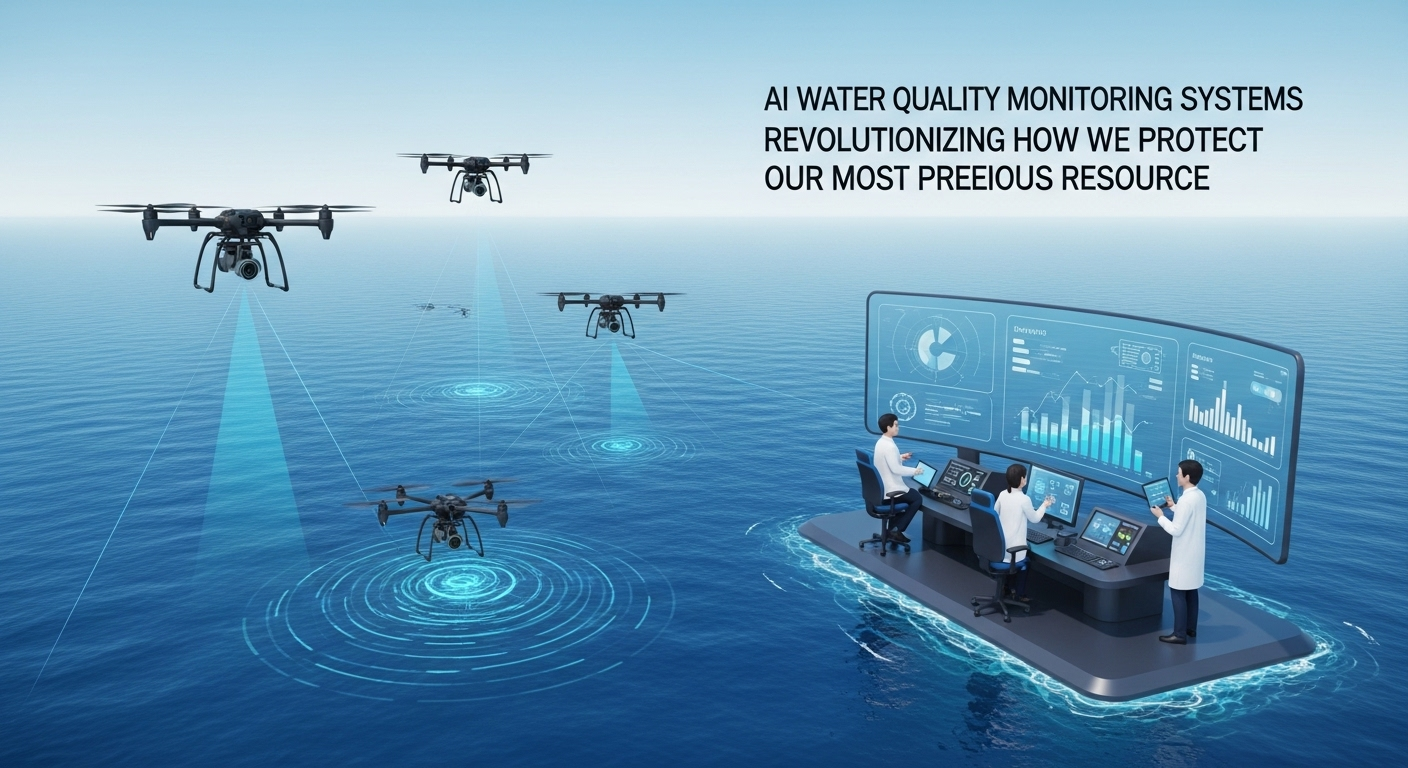
AI Water Quality Monitoring Systems

Water is one of the world’s most valuable resources, yet millions of people still lack access to clean and safe drinking water. At the same time, industrial pollution, urbanization, and climate change continue to threaten rivers, lakes, and groundwater supplies. Traditional water quality monitoring methods are often slow and reactive, making it difficult to detect contamination before it affects communities. In this guide, you’ll learn how AI powered water quality monitoring systems are transforming the way governments, industries, and utilities monitor, predict, and protect water quality in real time.

The Critical Need for Advanced Water Monitoring

Why Traditional Methods Fall Short

Traditional water quality monitoring relies heavily on manual sampling and laboratory analysis a process that can take days or even weeks to produce results. Picture this: a chemical spill occurs in a river on Monday morning, but by the time test results confirm contamination on Friday, thousands of people may have already consumed polluted water.

Key Limitations of Traditional Monitoring:

  • Time Delays: Lab results can take 24-72 hours
  • Limited Coverage: Spot-checking misses continuous changes
  • High Costs: Labor-intensive processes strain budgets
  • Human Error: Manual sampling introduces inconsistencies
  • Reactive Approach: Problems detected after damage occurs

What Is an AI Water Quality Monitoring System?

AI-powered water quality monitoring systems represent a paradigm shift from reactive to proactive water management. These intelligent systems combine real-time sensors, machine learning algorithms, and predictive analytics to provide instant, accurate water quality assessments.

Core Technologies Behind AI Water Monitoring

1. Smart Sensor Networks

Modern AI water monitoring systems deploy networks of intelligent sensors that continuously measure multiple parameters:

ParameterSensor TypeSignificance
pH LevelsIon-selective electrodesIndicates acidity/alkalinity
Dissolved OxygenOptical sensorsCritical for aquatic life
TurbidityNephelometric sensorsMeasures water clarity
TemperatureThermistorsAffects chemical reactions
ConductivityConductivity cellsIndicates dissolved salts
ChlorineColorimetric sensorsMonitors disinfection levels
Heavy MetalsElectrochemical sensorsDetects toxic contamination

2. Machine Learning Algorithms

AI systems employ various machine learning techniques to interpret sensor data:

Supervised Learning: Trained on historical data to recognize patterns and predict water quality trends.

Unsupervised Learning: Identifies anomalies and unusual patterns that might indicate contamination events.

Deep Learning: Neural networks process complex, multi-dimensional data to make sophisticated predictions.

Reinforcement Learning: Systems learn optimal responses to different water quality scenarios over time.

3. Edge Computing and Cloud Integration

Modern systems combine edge computing for real-time decisions with cloud processing for complex analytics:

  • Edge Processing: Immediate response to critical situations
  • Cloud Analytics: Deep learning and pattern recognition
  • Hybrid Approach: Best of both worlds for comprehensive monitoring

Real-World Success Stories

Case Study 1: Singapore’s Smart Water Grid

Singapore, facing severe water scarcity, implemented one of the world’s most advanced AI water monitoring systems. The Public Utilities Board (PUB) deployed over 300 smart sensors across the island nation’s water network.

Results Achieved:

  • 40% reduction in water quality incidents
  • 60% faster response time to contamination events
  • $50 million annual savings in operational costs
  • 99.9% water quality compliance rate

The system successfully predicted and prevented a major contamination event in 2023 when AI algorithms detected unusual chemical patterns 48 hours before traditional methods would have identified the issue.

Case Study 2: Thames Water’s Leak Detection Revolution

Thames Water, serving 15 million customers in London, implemented AI-powered monitoring across 20,000 miles of water pipes.

Challenge: London loses 25% of its treated water through leaks equivalent to 650 million liters daily.

AI Solution: Machine learning algorithms analyze pressure patterns, flow rates, and acoustic signatures to predict pipe failures before they occur.

Impact:

  • 30% reduction in water loss
  • £100 million savings over five years
  • 50% decrease in emergency repairs
  • Improved customer satisfaction scores

Case Study 3: The Great Barrier Reef Monitoring Project

Australia’s Great Barrier Reef Marine Park Authority partnered with IBM to deploy AI-powered water quality monitoring systems across 2,300 kilometers of reef.

Technology Used:

  • Underwater IoT sensors
  • Satellite imagery analysis
  • Machine learning for coral health prediction
  • Drone-based monitoring systems

Outcomes:

  • Early detection of coral bleaching events
  • 25% improvement in water quality predictions
  • Better-informed conservation decisions
  • Enhanced tourism sustainability

Industry Applications and Use Cases

Municipal Water Systems

Cities worldwide are adopting AI water monitoring to ensure public health and regulatory compliance.

Key Applications:

  • Treatment Plant Optimization: AI adjusts chemical dosing in real-time
  • Distribution Network Monitoring: Continuous quality tracking from source to tap
  • Leak Detection: Predictive maintenance prevents water loss
  • Regulatory Compliance: Automated reporting ensures standards are met

Success Metrics:

  • 95% reduction in manual testing requirements
  • 70% faster contamination detection
  • 40% improvement in treatment efficiency
  • 80% decrease in compliance violations

Industrial Water Management

Manufacturing facilities use AI monitoring to optimize processes and ensure environmental compliance.

Common Applications:

  • Cooling Water Systems: Preventing scale and corrosion
  • Process Water Quality: Maintaining product standards
  • Wastewater Treatment: Optimizing discharge quality
  • Environmental Compliance: Meeting discharge regulations

Agricultural Water Systems

Smart farming increasingly relies on AI water monitoring for irrigation optimization and crop health.

Benefits for Agriculture:

  • Precision Irrigation: Water application based on real-time soil conditions
  • Nutrient Management: Optimal fertilizer application timing
  • Disease Prevention: Early detection of water-borne plant diseases
  • Resource Conservation: 30-50% reduction in water usage

Key Features of AI Water Quality Monitoring Systems

Predictive Analytics

AI systems don’t just monitor current conditions they predict future water quality trends.

Prediction Capabilities:

  • Contamination event forecasting
  • Equipment failure prediction
  • Seasonal quality variations
  • Long-term trend analysis

Automated Response Systems

When AI detects anomalies, systems can automatically:

  • Adjust treatment parameters
  • Isolate contaminated sections
  • Alert emergency responders
  • Initiate backup systems

Integration with Weather Data

AI systems incorporate meteorological data to enhance predictions:

  • Rainfall impact on water quality
  • Temperature effects on chemical reactions
  • Storm surge contamination risks
  • Drought impact assessments

Implementation Challenges and Solutions

Technical Challenges

ChallengeSolution
Sensor ReliabilityRedundant systems and self-calibrating sensors
Data IntegrationStandardized protocols and APIs
False AlarmsAdvanced algorithms and human oversight
CybersecurityEncrypted communications and secure networks

Economic Considerations

Initial Investment Breakdown:

  • Hardware and Sensors: 40-50%
  • Software Development: 25-30%
  • Installation and Setup: 15-20%
  • Training and Support: 10-15%

Return on Investment: Most organizations see positive ROI within 18-24 months through:

  • Reduced operational costs
  • Prevented contamination incidents
  • Improved regulatory compliance
  • Enhanced operational efficiency

Regulatory Compliance

AI water monitoring systems must meet stringent regulatory requirements:

Key Regulations:

  • Safe Drinking Water Act (USA)
  • Water Framework Directive (EU)
  • WHO Guidelines for Drinking Water Quality
  • Local environmental protection standards

Future of AI in Water Quality Monitoring

Emerging Technologies

Quantum Sensors: Ultra-sensitive detection capabilities for trace contaminants

Blockchain Integration: Immutable water quality records for transparency

5G Connectivity: Faster data transmission and real-time responses

Satellite Monitoring: Large-scale water body analysis from space

Market Growth Projections

The global AI water monitoring market is experiencing explosive growth:

  • 2023 Market Value: $2.1 billion
  • 2030 Projected Value: $8.7 billion
  • Annual Growth Rate: 22.3%
  • Key Drivers: Environmental regulations, water scarcity concerns, technological advancement

Next-Generation Features

Advanced AI Capabilities Coming Soon:

  • Natural language processing for report generation
  • Computer vision for visual water quality assessment
  • Autonomous underwater vehicles for deep-water monitoring
  • AI-powered water treatment optimization

Getting Started with AI Water Monitoring

Assessment Phase

Before implementing AI water monitoring, organizations should:

  1. Conduct Water Quality Audit: Identify current monitoring gaps
  2. Define Objectives: Establish clear goals and success metrics
  3. Evaluate Infrastructure: Assess existing systems and connectivity
  4. Budget Planning: Determine investment requirements and ROI expectations

Implementation Roadmap

Phase 1: Pilot Program (3-6 months)

  • Deploy sensors in critical locations
  • Establish baseline data collection
  • Train staff on new systems
  • Validate AI model accuracy

Phase 2: Expansion (6-12 months)

  • Scale sensor network
  • Integrate with existing systems
  • Develop custom algorithms
  • Establish response protocols

Phase 3: Optimization (12+ months)

  • Fine-tune AI models
  • Implement predictive capabilities
  • Automate response systems
  • Continuous improvement processes

Key Success Factors

Critical Elements for Success:

  • Executive leadership support
  • Cross-functional team collaboration
  • Adequate training and change management
  • Robust data governance policies
  • Vendor selection and partnership management
ParameterSensor TypePurpose
pHIon-selective electrodeMeasures acidity or alkalinity
Dissolved OxygenOptical sensorIndicates oxygen available for aquatic life
TurbidityNephelometric sensorMeasures water clarity
TemperatureThermistorTracks temperature changes
ConductivityConductivity cellMeasures dissolved salts
ChlorineColorimetric sensorMonitors disinfectant levels
Heavy MetalsElectrochemical sensorDetects toxic contaminants

The Environmental and Social Impact

Environmental Benefits

AI water monitoring systems contribute significantly to environmental protection:

  • Pollution Prevention: Early detection prevents widespread contamination
  • Ecosystem Protection: Monitoring helps preserve aquatic habitats
  • Resource Conservation: Optimized usage reduces waste
  • Climate Adaptation: Better preparation for climate-related water challenges

Social Impact

The technology’s social benefits extend far beyond environmental protection:

Public Health: Faster contamination detection protects communities

Economic Development: Reliable water quality supports industrial growth

Social Equity: Improved monitoring in underserved communities

Disaster Response: Rapid assessment capabilities during emergencies

Conclusion: The Future of Water is Smart

AI water quality monitoring systems represent more than just technological advancement they’re a fundamental shift toward intelligent, proactive water management. As we face increasing challenges from climate change, population growth, and industrial development, these systems provide the tools necessary to protect our most precious resource.

The success stories from Singapore, London, and Australia demonstrate the transformative potential of AI in water management. With continued technological advancement and increasing adoption, AI water monitoring systems will play an increasingly critical role in ensuring clean, safe water for future generations. Organizations considering implementation should start with pilot programs, focusing on specific challenges and building capabilities over time. The investment in AI water monitoring isn’t just about technology – it’s about securing a sustainable water future for our communities and our planet.

As we move forward, the integration of AI, IoT, and advanced analytics will continue to evolve, making water monitoring more intelligent, efficient, and effective. AI is becoming an important tool for improving water quality monitoring, helping utilities and industries detect contamination faster, optimize treatment processes, and make better decisions using real-time data. While AI does not replace laboratory testing or regulatory oversight, it complements traditional methods by providing continuous monitoring and predictive insights. As sensor technology and machine learning continue to improve, AI is expected to play an increasingly important role in protecting water resources and supporting sustainable water management.

AI Energy Efficiency in Smart Buildings

Smartphones charge overnight, air conditioners run all day, office lights stay on long after people leave—all of this adds up. Buildings, both residential and commercial, are massive energy consumers.

In fact, according to the International Energy Agency (IEA), buildings account for nearly 30% of global energy consumption and 28% of energy-related CO₂ emissions.

With rising energy costs and climate change concerns, cities and organizations are searching for better solutions. One powerful answer lies in Artificial Intelligence (AI)—a technology that’s helping buildings become intelligent, self-optimizing, and environmentally conscious.


🤖 What Is AI for Energy Efficiency in Smart Buildings?

AI energy efficiency in buildings involves using machine learning, data analytics, computer vision, and automation to monitor, predict, and control energy usage in real time.

This isn’t just about turning off lights remotely—it’s about:

  • Predicting energy usage patterns
  • Dynamically adjusting HVAC (Heating, Ventilation, Air Conditioning)
  • Integrating renewable energy sources
  • Managing lighting based on human presence
  • Learning from occupant behavior to optimize systems

In simple terms, AI transforms buildings into living ecosystems that think, learn, and optimize energy use on their own.


🧠 Core Technologies That Enable Smart Energy Efficiency

TechnologyFunction
Machine Learning (ML)Forecast energy demand, learn from usage trends
Computer Vision (CV)Detect room occupancy, adjust lighting/HVAC
Natural Language Processing (NLP)Voice-activated energy controls (e.g., Alexa)
Reinforcement LearningDynamic system control that improves over time
IoT SensorsFeed real-time temperature, motion, and air quality data
Digital TwinsVirtual models of buildings to simulate energy scenarios

💡 Real-World Applications of AI in Smart Buildings

🌬️ 1. HVAC Optimization

AI systems adjust heating and cooling dynamically based on:

  • Weather forecasts
  • Number of occupants
  • Room usage patterns
  • Time of day

This reduces HVAC energy consumption by 20–40%, especially in large commercial buildings.

💡 2. Smart Lighting

AI + motion sensors + ambient light sensors = a system that:

  • Dims or turns off lights in empty rooms
  • Adjusts brightness based on sunlight
  • Reduces unnecessary energy waste

🔋 3. Energy Forecasting and Load Balancing

AI predicts future energy demand and usage spikes so buildings can:

  • Reduce consumption during peak hours
  • Store energy (e.g., in batteries) during low-demand periods
  • Cut electricity bills through time-of-use pricing strategies

☁️ 4. Cloud-Based Building Management Systems (BMS)

AI-powered BMS integrate all building systems—HVAC, lighting, security, and more—into a centralized dashboard, allowing real-time control and insights.

🔌 5. Appliance-Level Monitoring

Using AI and smart plugs/meters, building managers can detect energy hogs, phantom loads, or failing equipment based on unusual patterns.


🏙️ Real-World Examples of AI Energy Efficiency

🏢 1. Google’s DeepMind x Data Centers

Google used DeepMind AI to reduce energy used for cooling its data centers by 40%, simply by analyzing past patterns and dynamically adjusting systems.

🇸🇬 2. Singapore’s Smart Nation Buildings

Singapore’s smart buildings use AI to monitor and optimize electricity, water, and air conditioning—some with net-zero energy goals.

🇨🇳 3. Tencent’s Green Data Centers

Tencent’s headquarters uses AI for intelligent lighting and ventilation. It has achieved over 30% energy savings.

🇳🇱 4. The Edge (Amsterdam)

Dubbed “the smartest building in the world,” The Edge uses AI to adjust everything—desk lighting, ventilation, and even coffee machines—based on user behavior.


🧑‍🎓 AI Project Ideas for Students and Engineers

Interested in building your own AI energy efficiency solution? Here are some hands-on, innovative project ideas:


💡 1. Smart Room Occupancy Detector

Goal: Use computer vision to detect if a room is occupied and adjust lights/HVAC accordingly.

Tech Stack:

  • Python + OpenCV
  • Raspberry Pi + Camera Module
  • Relay modules to control lights or fans

🌡️ 2. HVAC Optimization with ML

Goal: Predict indoor temperature and optimize heating/cooling based on outdoor temperature and occupancy data.

Sample Code Snippet (Regression Model):

from sklearn.linear_model import LinearRegression
import pandas as pd

data = pd.read_csv('hvac_data.csv')
X = data[['outdoor_temp', 'occupants']]
y = data['indoor_temp']

model = LinearRegression()
model.fit(X, y)

prediction = model.predict([[32, 10]])
print("Predicted indoor temp:", prediction)

📈 3. Energy Consumption Forecaster

Goal: Predict the next week’s energy usage using historical data.

Tools: TensorFlow, Keras, LSTM, time-series datasets


🔌 4. Phantom Load Detector

Goal: Identify idle appliances drawing power using smart plugs and an AI anomaly detection model.

Concept: Build a dashboard to visualize energy use per device, and recommend unplugging idle devices.


🌤️ 5. Solar Panel Optimization

Goal: Use AI to adjust building energy use based on solar panel output and sunlight availability forecasts.

Bonus: Integrate with a home battery storage system!


🚀 Benefits of AI Energy Efficiency for Cities & Communities

StakeholderBenefit
🏙️ City PlannersLower grid load, improved sustainability
🏢 Building OwnersReduced utility costs, increased property value
👷‍♂️ Facility ManagersAutomated alerts, predictive maintenance
👨‍👩‍👧 ResidentsComfort, cost savings, better indoor air
🌍 EnvironmentLower carbon footprint, efficient resource use

🔮 Future Trends in AI-Powered Buildings

  1. Self-Healing Systems: AI that detects faults and auto-corrects HVAC or lighting anomalies.
  2. Voice & Gesture-Based Interfaces: Controlling energy use through natural interaction.
  3. Energy Swarm Intelligence: Buildings communicate to share or redistribute energy dynamically.
  4. Net-Zero AI Buildings: Structures that use AI + solar + smart storage to become energy independent.
  5. AI Building Certifications: Future green certifications may depend on how smart a building’s AI system is.

🌱 The Bigger Picture: Sustainability Through Intelligence

The power of AI in buildings is more than just saving on electric bills. It’s about:

  • Reducing fossil fuel reliance
  • Mitigating climate change
  • Creating responsive environments
  • Empowering smart cities

From individual homes to corporate campuses, energy efficiency is the low-hanging fruit of climate action—and AI gives us the ladder to reach it.

The smartest buildings aren’t just high-tech—they’re high-impact.


📚 Resources & Tools to Explore


🎯 Final Thoughts: Building a Smarter Future, One Watt at a Time

Energy efficiency isn’t a futuristic dream—it’s a necessity today. AI empowers buildings to become self-regulating, intuitive, and eco-conscious. Whether it’s a school, hospital, data center, or home, the potential impact is massive.

So whether you’re an engineer, student, architect, policymaker, or entrepreneur—this is your moment to innovate. Start small. Train a model. Measure your energy. Tinker with sensors. Build something smarter.

Because the cleanest energy… is the energy we don’t waste.


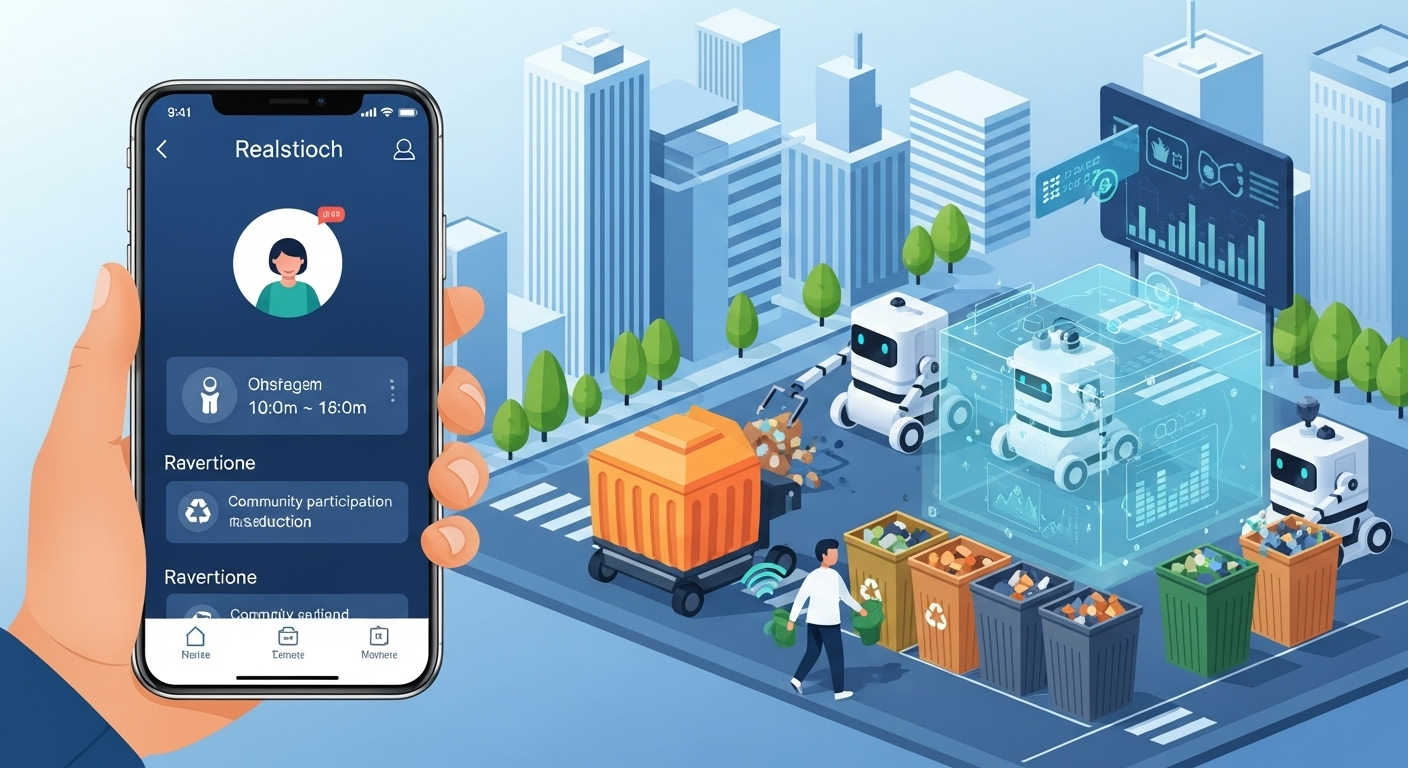
AI Waste Management Solutions for Cities

How Artificial Intelligence is Revolutionizing Urban Cleanliness and Sustainability


Modern cities are vibrant hubs of culture, technology, and progress—but they also produce a staggering amount of waste. From food leftovers and plastic packaging to electronics and construction debris, urban waste is a persistent and growing issue.

According to the World Bank, cities generate over 2 billion tonnes of solid waste annually, and this figure is projected to rise to 3.4 billion tonnes by 2050. Mismanaged waste leads to:

  • Environmental pollution
  • Public health risks
  • Overflowing landfills
  • Inefficient recycling

To tackle this, urban planners and technologists are turning to Artificial Intelligence (AI)—a powerful enabler of smart, efficient, and sustainable waste management.

🔍 What is AI Waste Management?

AI waste management refers to the application of machine learning, computer vision, data analytics, and automation to optimize every stage of the waste lifecycle, including:

  • Monitoring: Real-time bin status, waste types, and volumes
  • Collection: Route planning, fleet management, and bin pickup scheduling
  • Sorting: Automated material classification using image recognition
  • Recycling: Identifying recyclable vs. non-recyclable waste
  • Prediction: Forecasting future waste generation and optimizing services

In essence, AI turns a traditionally manual, reactive process into an intelligent, proactive system.


🚛 Key Use Cases of AI in Urban Waste Management

1. Smart Bin Monitoring and Overflow Prevention

AI-enabled IoT smart bins use ultrasonic or weight sensors to monitor fill levels in real-time. When bins approach capacity, alerts are sent to collection teams, ensuring timely pickups and reducing overflowing litter.

2. Optimized Garbage Collection Routes

AI analyzes:

  • Historical bin data
  • Traffic patterns
  • Real-time bin fill levels
  • Weather conditions

With this, it calculates dynamic, fuel-efficient collection routes—saving time, reducing fuel consumption, and lowering emissions.

3. Automated Waste Sorting

AI-driven robotic arms use computer vision and sensors to detect and separate waste into categories like:

  • Plastic
  • Paper
  • Glass
  • Metal
  • Organic

This reduces contamination, increases recycling rates, and improves worker safety.

4. Illegal Dumping Detection

Cities deploy AI-integrated CCTV systems that automatically detect and flag:

  • Unauthorized dumping
  • Unusual waste volumes
  • Fires or dangerous material presence

This helps enforcement teams respond rapidly and maintain public hygiene.

5. Data-Driven Policy and Planning

Governments use AI analytics to:

  • Forecast waste generation
  • Identify high-waste areas
  • Design awareness campaigns
  • Evaluate effectiveness of recycling programs

📊 AI Technologies That Power Smart Waste Management

AI TechApplicationExample
Machine Learning (ML)Predict bin fill levels, waste volume, optimize routesTime-series forecasting for waste trends
Computer Vision (CV)Waste material recognition, sorting automationIdentifying plastic bottles on conveyor belts
Natural Language Processing (NLP)Analyze citizen complaints, social media reportsIdentifying hotspots from Twitter or apps
Reinforcement LearningDynamic route planning and vehicle optimizationSelf-improving collection routes
IoT + AI IntegrationSmart bin fill detection, location trackingReal-time fleet and bin management dashboards

🌍 Global Examples of AI Waste Management in Action

🇺🇸 AMP Robotics (USA)

AMP uses AI and robotics to sort recyclable waste with 99% accuracy. Their system identifies and separates materials on conveyor belts in milliseconds, outperforming human workers.

🇫🇮 ZENRobotics (Finland)

AI-powered robotic arms sort construction and demolition waste, improving safety and reducing labor costs in harsh conditions.

🇮🇳 SmartBins (India Pilot Project)

Several Indian cities are testing AI-integrated smart bins that notify authorities before they overflow. These bins also send data to cloud platforms for citywide optimization.

🇪🇸 Barcelona Smart City Initiative

Uses IoT and AI to track waste bins across the city, reducing collection frequency by 20% and carbon emissions by 25%.

🇸🇬 Singapore’s AI-Driven Waste System

Combines satellite images, AI, and IoT to detect illegal dumps, monitor landfill capacity, and enhance recycling center efficiency.


💡 Why Cities Should Invest in AI Waste Management

✅ 1. Cost Savings

Automated route planning and optimized resource allocation reduce fuel, maintenance, and labor costs.

✅ 2. Environmental Sustainability

Improved recycling and reduced landfill use lead to:

  • Lower greenhouse gas emissions
  • Cleaner waterways and air
  • More sustainable urban growth

✅ 3. Operational Efficiency

AI eliminates guesswork, enabling smarter decisions, faster response times, and consistent service delivery.

✅ 4. Health and Safety

AI minimizes human exposure to hazardous waste and improves sanitation—especially crucial during pandemics or disease outbreaks.

✅ 5. Civic Engagement and Trust

Real-time feedback, transparent dashboards, and cleaner public spaces enhance citizen satisfaction and cooperation.


🎓 AI Waste Management: A Goldmine for Student Projects

AI in waste management is a hot area for students, researchers, and startups. Here are some project ideas:

📱 1. Mobile Waste Sorter App

Build an app using TensorFlow Lite or MediaPipe that classifies waste images into categories (plastic, metal, compost) using your phone camera.

📈 2. Bin Overflow Prediction Model

Use datasets of bin fill levels and train a linear regression or LSTM model in Python to forecast when bins will be full.

from sklearn.linear_model import LinearRegression
import pandas as pd

data = pd.read_csv("bin_data.csv")
X = data[["day", "temp", "humidity"]]
y = data["fill_level"]

model = LinearRegression()
model.fit(X, y)

# Predict future fill level
pred = model.predict([[5, 30, 70]])
print("Predicted fill:", pred)

🧠 3. Smart Route Optimizer

Use reinforcement learning to simulate collection trucks that learn the best routes to minimize time and fuel.

🛰️ 4. Satellite Dump Detection

Train a CV model using satellite images to identify illegal landfills in remote areas.

🔊 5. NLP Complaint Analysis

Analyze city complaint logs to identify garbage hotspots and prioritize interventions using spaCy or BERT.


💬 Inspiration: Why AI in Waste Management Matters

The global population is growing, and cities are expanding. Urban waste is no longer just a sanitation issue—it’s an environmental, health, and economic challenge. But with the rise of AI-powered solutions, we now have the tools to build:

  • Cleaner streets
  • Smarter cities
  • More sustainable futures

AI doesn’t just help us manage trash—it helps us reimagine waste as a resource. With AI, every piece of data, every pile of garbage, becomes an opportunity to optimize, recycle, and create circular economies.


📚 Resources to Explore Further

🚀 Final Thoughts

Artificial Intelligence is no longer a luxury—it’s a necessity for modern urban living. Cities that embrace AI waste management will not only save money and improve public hygiene, but also lead the way in sustainability and innovation.

Whether you’re a policymaker, tech enthusiast, student, or entrepreneur, now is the time to act. The tools are available. The data is abundant. And the need is urgent.

Let’s build cities that are not just smart—but clean, efficient, and responsible. With AI, we’re not just managing waste—we’re creating a smarter planet.

AI for Precision Agriculture Yield Prediction

Imagine this: Ali, a 24-year-old farmer from Punjab, wakes up early, grabs his tablet, and checks an app. The app tells him that his wheat crop will yield 6.3 tonnes per hectare, and warns that one area of his field needs more nitrogen.

Ali didn’t go to a university for agriculture. He didn’t study data science. But thanks to Artificial Intelligence (AI) and a few affordable IoT sensors, he’s now running a smarter farm than his father ever dreamed possible.

This isn’t science fiction. It’s the present. And it’s spreading like wildfire.

🚜 What is Precision Agriculture?

Precision Agriculture (PA) is farming that uses technology to optimize every aspect of crop production. Instead of treating an entire field the same, farmers can now manage each square meter differently based on data.

Precision agriculture uses:

  • IoT sensors in the soil
  • Satellites and drones in the sky
  • AI algorithms in the cloud
  • And mobile apps in your pocket

And when it comes to yield prediction—figuring out how much crop you’ll get before harvest—AI becomes the superstar.


🧠 Why Yield Prediction Matters

Farmers have always tried to guess their harvest:

  • “Will the rains be enough?”
  • “Is this soil good?”
  • “Will I make enough to repay my loan?”

AI changes the game by turning guessing into data-driven forecasting.

Accurate yield prediction helps:

  • Farmers plan irrigation, fertilization, and market sales
  • Governments estimate food supply and stabilize prices
  • Companies optimize logistics and inventory

In short, knowing your yield early saves time, money, and lives.


🛰️ The Data Behind the Magic

To make these predictions, AI needs data—lots of it.

📊 Common Data Sources for Yield Prediction:

Data TypeExamplesHow It’s Collected
Soil DatapH, nitrogen, moistureIoT sensors, soil tests
Weather DataRainfall, temperature, windLocal stations, APIs
Crop ImagesPlant health, growth stageDrones, satellites
Historical DataPrevious yieldsGovt or farm records
Remote SensingNDVI, chlorophyll indexSatellites like Landsat, Sentinel

👨‍🌾 Meet Ali: A Smart Farming Story

Ali inherited 5 acres of land and a dream to modernize it. Here’s how he built his AI-powered yield prediction system:

🛠️ Step 1: He Set Up IoT Sensors

Ali installed soil moisture and pH sensors. These sent real-time data to his phone every 30 minutes.

📡 Step 2: He Used Satellite Imagery

Using free tools like Google Earth Engine, Ali tracked NDVI (a vegetation index) to monitor plant health.

🧠 Step 3: He Built an AI Model

With help from a local agri-tech startup, Ali used a Random Forest regression model trained on:

  • His own farm’s data
  • Nearby government records
  • Weather forecasts from OpenWeatherMap API

📈 Step 4: He Got Results

His app said:
🌾 Expected Yield: 6.3 tonnes/hectare
⚠️ Area A2: Low chlorophyll—apply urea

Ali applied the fertilizer early. Two months later, the model was 95% accurate, and he harvested more than expected.


🧑‍💻 Want to Build a Project Like Ali? Here’s How:

Whether you’re a student, hobbyist, or tech enthusiast—you can build a crop yield predictor in Python.

🗂️ Step 1: Get the Dataset

Try:

🧪 Step 2: Train a Machine Learning Model

import pandas as pd
from sklearn.model_selection import train_test_split
from sklearn.ensemble import RandomForestRegressor
from sklearn.metrics import mean_squared_error

# Load data
df = pd.read_csv('crop_yield_data.csv')
X = df[['rainfall', 'temperature', 'soil_pH', 'NDVI']]
y = df['yield']

# Train/test split
X_train, X_test, y_train, y_test = train_test_split(X, y, test_size=0.2, random_state=42)

# Train model
model = RandomForestRegressor(n_estimators=100)
model.fit(X_train, y_train)

# Evaluate
predictions = model.predict(X_test)
print("MSE:", mean_squared_error(y_test, predictions))

🎨 Optional: Visualize with Folium or Matplotlib

import folium

m = folium.Map(location=[31.52, 74.35], zoom_start=10)
folium.Marker([31.52, 74.35], popup='Ali\'s Farm - High Yield').add_to(m)
m.save("map.html")

Boom! Now you have your own basic yield prediction system.


🧠 Other Project Ideas for Students

1. Yield Forecast Mobile App

Use Flutter or React Native + Flask backend with a trained model.

2. Drone Crop Analysis

Train a CNN to detect plant diseases using drone images.

3. LSTM-based Weather Sequence Predictor

Forecast yields using time-series rainfall and temperature.

4. Farm Dashboard

Build a full-stack web app that visualizes soil + weather data and predicts yield weekly.


🌍 Real-World Applications and Tools

CompanyWhat They DoTech Used
IBM Watson Decision PlatformPredict yield & pests using AI + weather + satellite dataAI, Cloud
Microsoft FarmBeatsIoT + AI platform for small farmersAzure, ML, IoT
John DeereSmart tractors that optimize planting and sprayingGPS, CV, Sensors
CropInYield prediction & farm advisory for 52 countriesML, Satellite AI
RML AgTech (India)App for farmers to get yield, price, and weather forecastsNLP, Data Science

💡 Why AI Yield Prediction is a Game-Changer

For Farmers

  • Plan ahead: Know how much to sell or store
  • Optimize inputs: Don’t waste water or fertilizer
  • Predict losses early due to pests, drought, or diseases

For Students

  • Great for projects in AI, ML, IoT, AgriTech
  • Interdisciplinary: Combines coding, data, and biology
  • Make an impact: Help real farmers solve real problems

For the World

  • Reduce food waste
  • Improve food security
  • Combat climate change

🚀 The Future: What’s Next?

Ali’s next plan? Add a tiny weather station and integrate it with his app. Then maybe even start a YouTube channel to teach other farmers.

Companies are working on real-time drone swarms, AI fertilizer mixers, and even plant-to-cloud sensors.

And students like you? You could be building the next big agri-tech startup. Or inventing tools that help feed the planet.


📚 Resources to Learn More


🧭 Final Thoughts

AI isn’t just for robots or self-driving cars. It’s already plowing fields, watering crops, and saving lives.

With just some data, a model, and imagination, you can build the future of farming—just like Ali.

And maybe, just maybe, the next farm that feeds the world will run not on luck or guesswork—but on your code.


💰 The Perfect Use of AI in Finance: Tips, Tricks, and Tools

Intro:

Gone are the days when managing finances meant pouring over spreadsheets and making gut decisions. In today’s fast-paced economy, Artificial Intelligence (AI) is becoming a critical tool in finance — not just for big banks or investment firms, but also for small businesses, startups, and everyday individuals.

AI is reshaping how we analyze data, detect fraud, manage portfolios, forecast trends, and even personalize customer experiences. In short: it’s making financial decision-making faster, smarter, and more precise.

In this article, we’ll break down:

  • The best applications of AI in finance
  • Smart tools to use
  • Real-world success stories
  • Tips and tricks for implementation
  • Risks to consider

🔢 Where AI Works Best in Finance

1. 📊 Predictive Analytics & Forecasting

AI uses machine learning to predict stock trends, currency movement, and market conditions.

Use Case: Hedge funds use AI to spot market opportunities before human traders even notice them.

Tool Spotlight:

  • Kavout: Predicts stock movements using AI-based ratings
  • Zacks: Combines AI with analyst insights for financial forecasting

2. 💳 Fraud Detection and Prevention

AI algorithms can detect unusual activity in real time, preventing fraud before it happens.

Tool Spotlight:

  • Feedzai and Darktrace use AI to analyze transactions and flag fraud

Real Story #1: Fintech App in Brazil
A mobile wallet app integrated Feedzai and reduced fraud incidents by 74% in 6 months.

3. 📊 Robo-Advisors and Investment Planning

AI-driven robo-advisors help people invest money based on their risk profile, goals, and market data.

Tool Spotlight:

  • Betterment and Wealthfront use AI to build automated, diversified portfolios

Benefit: Affordable financial advice for people who can’t afford a human financial planner.

4. 💶 Credit Scoring and Loan Underwriting

AI analyzes credit history, spending behavior, and even mobile usage data to assess creditworthiness.

Tool Spotlight:

  • Upstart: Uses AI to assess borrower risk beyond traditional credit scores

Real Story #2: Microloan Platform in India
An AI system used behavioral and smartphone usage data to approve loans for users with no credit history. Default rates stayed below 6%.


💬 AI in Personal Finance Management

✉️ Budgeting and Spending Alerts

AI-powered apps help track expenses, analyze spending habits, and recommend budgets.

Tool Spotlight:

  • Cleo AI: A chatbot that gives snarky (but smart) financial advice
  • Mint + AI: Provides real-time budget analysis and alerts

🧳 Savings and Goal Tracking

AI can automatically transfer spare change into savings or adjust your saving habits based on behavior.

Tool Spotlight:

  • Qapital and Digit: Automate savings using AI logic and behavioral triggers

Real Story #3: University Student in Germany
He used Digit to automate saving €5-10 daily based on his spending. In 8 months, he saved enough for a short trip to Spain — without noticing the deductions.


🚀 AI for Business Finance and Accounting

📑 Automated Bookkeeping

AI accounting tools categorize transactions, match receipts, and generate reports.

Tool Spotlight:

  • QuickBooks AI, Xero, and Zoho Books

📈 Financial Forecasting

Predicting cash flow, revenue, and expenses becomes easier with AI-based financial models.

Tool Spotlight:

  • Futrli Predict: Forecasts revenue based on customer, seasonality, and expense trends

Real Story #4: Bakery Chain in Australia
Using AI forecasting, a bakery optimized its ingredient orders. Waste dropped by 22%, and profits grew by 15% in just three quarters.

💵 Invoice and Payment Automation

Tools like Bill.com use AI to process invoices, track payments, and prevent duplicates.


☑️ Top Tips and Tricks for Using AI in Finance

✅ 1. Start with One Area

Don’t try to automate everything at once. Begin with one area — like budgeting, fraud detection, or bookkeeping — and scale up.

✅ 2. Combine AI with Human Oversight

Let AI handle the numbers, but always review major financial decisions yourself.

✅ 3. Use AI as an Early Warning System

Set up alerts for unusual spending, low balances, or risky investments.

✅ 4. Educate Yourself on AI Tools

Take a short online course on how AI works in finance to make smarter tool choices.

✅ 5. Ensure Data Security

Choose tools that are GDPR, CCPA, or ISO-certified to protect your financial data.


🚫 Risks and Considerations

❌ Over-Reliance on Automation

AI isn’t perfect. Algorithms can fail, and markets can behave unexpectedly. Always have a manual backup.

⚠️ Algorithmic Bias

AI models trained on biased data can lead to unfair loan decisions or investment recommendations.

🛡️ Security Concerns

Financial data is sensitive. Breaches can be devastating, so choose AI platforms with strong encryption and compliance.


🌐 The Future of AI in Finance

  • Hyper-personalized banking: AI will deliver advice tailored to your exact goals and habits
  • AI + Blockchain: Secure, transparent, and autonomous financial systems
  • Voice-activated finance: AI assistants managing money via voice commands
  • Emotion-aware investing: AI detecting market sentiment via social media

Real Story #5: Digital Nomad in Thailand
He uses an AI assistant that tracks forex rates, notifies him of low-cost transfer windows, and recommends crypto trades. He manages his entire financial life through his phone.


📆 Conclusion: Smart Money Needs Smart Tools

AI isn’t here to replace financial professionals or human judgment. It’s here to enhance, simplify, and accelerate. Whether you’re a small business owner, investor, or everyday consumer, using AI for finance means:

  • Better decisions
  • Faster actions
  • More control over your money

“The future of finance is intelligent, intuitive, and accessible — thanks to AI.”


Next Step: Choose one AI tool from this article and try it for a week. Watch how much easier managing money can become when you work with the right intelligent partner.

🛒 How to Use AI for Your Small E-Commerce Business Startup

Intro: Big Tech, Small Shop

In the age of Amazon, running a small e-commerce startup might feel like a David vs. Goliath story. But thanks to Artificial Intelligence (AI), small businesses now have access to powerful tools that level the playing field. Whether you sell handmade candles, clothing, or digital downloads, AI can help you compete smarter, reach more customers, and work more efficiently — even on a tight budget.

This article breaks down how to use AI in your small e-commerce business, from product research to customer service, with real-world stories and step-by-step tips to help you start strong.


📆 Step 1: Market Research & Product Ideas

🔢 Use AI to Discover Winning Products

AI tools can analyze market trends, customer preferences, and competitor data to help you find profitable niches or trending products.

Tool Spotlight:

  • ChatGPT: Ask for product ideas in specific niches
  • Trend Hunter AI: Identifies rising trends
  • Google Trends + NLP tools: Uncover emerging product demand

Real Story #1: Custom Jewelry Seller in Turkey
A new Etsy store owner used ChatGPT to brainstorm personalized product ideas based on customer reviews and Pinterest trends. Within a month, she launched a collection inspired by zodiac signs and saw her first 100 sales.


📃 Step 2: AI-Enhanced Store Setup and Design

📗 Build Better Websites Faster

AI website builders use templates, tone, and industry preferences to generate attractive storefronts in minutes.

Tool Spotlight:

  • Wix ADI or Shopify Magic: AI-generated layouts, copy, and product descriptions
  • Looka: AI logo design

Pro Tip: Ask ChatGPT to write your About page, FAQ, and product descriptions based on your tone of voice and target customer.

Real Story #2: T-shirt Brand from the Philippines
Using Wix ADI and AI-generated content, a first-time entrepreneur launched a polished online store in 5 days without hiring a designer or writer.


📅 Step 3: Content Creation and Marketing

🎨 Create Eye-Catching Content in Less Time

AI Tools for Content:

  • Canva AI: Graphic design for ads and social media
  • Jasper: AI copywriting for product ads and blog posts
  • Copy.ai: Generates sales emails and headlines
  • Lumen5: Turns blog posts into videos

Real Story #3: Skincare Startup in New York
A small team used Jasper and Canva to run Facebook ads. With AI-generated copy and designs, their ad engagement doubled while content production time dropped by 60%.

🔬 SEO and Blog Writing

  • Use tools like SurferSEO and ChatGPT to create optimized blog content for Google rankings
  • AI suggests trending keywords and formats

📢 Step 4: Smarter Customer Engagement

🔍 AI Chatbots = 24/7 Support

AI chatbots can answer common questions, guide purchases, and reduce cart abandonment.

Tool Spotlight:

  • Tidio, ManyChat, or Shopify Inbox with AI
  • Can integrate with Facebook Messenger or your website

Use Case:
Automate responses to:

  • “Where is my order?”
  • “How do I return this?”
  • “Do you have a size guide?”

Real Story #4: Organic Tea Brand in London
The founder set up a chatbot to answer 10 FAQs. It reduced support tickets by 40%, improved customer satisfaction, and increased repeat orders.


🏦 Step 5: Inventory, Pricing, and Logistics

📊 AI for Smart Inventory Management

AI can predict sales trends, reduce overstock, and automate restocking reminders.

Tool Spotlight:

  • Zoho Inventory, Skubana, or Inventory Planner AI

💲 Dynamic Pricing Tools

Tools like Prisync and RepricerExpress use AI to track competitor prices and adjust yours in real time.

Real Story #5: Mobile Accessories Store in Canada
Using Inventory Planner AI, the store reduced unsold stock by 35% and increased overall profitability during holiday season.


📊 Step 6: AI-Powered Advertising and Retargeting

💼 Run Smarter Ads with AI

Ad platforms now include AI to optimize your campaigns automatically.

Tool Spotlight:

  • Meta Advantage+: AI ad testing and targeting
  • Google Performance Max: Automated multi-channel ads
  • AdCreative.ai: Generate high-converting ad designs

Use Case:
Upload your product and brand brief. The AI tool tests multiple headlines, images, and audiences. You only pay for what converts.

Bonus: Use ChatGPT to brainstorm ad angles or refine product value propositions.


🌐 Step 7: Customer Retention with AI

🌟 Email Marketing and Personalization

AI segments your customer base, predicts buying behavior, and customizes email campaigns.

Tool Spotlight:

  • Klaviyo AI, Mailchimp Smart Recommendations, Omnisend

Tactics to Try:

  • Personalized birthday offers
  • “You might like” product suggestions
  • Win-back campaigns for inactive customers

Real Story #6: Subscription Box Startup in India
By using Klaviyo’s AI suggestions, the founder sent smarter follow-ups, which improved open rates by 42% and grew monthly subscribers by 20%.


🚀 The Big Advantage: Competing with Giants

You don’t need a team of 50 or a Silicon Valley budget. With AI, your tiny shop can:

  • Run ads like a pro
  • Provide customer support around the clock
  • Optimize your prices and inventory
  • Look polished and professional from day one

“AI isn’t just for big companies anymore. It’s your smartest, cheapest employee.”


⚠️ Things to Keep in Mind

  1. Start Small: Choose one AI tool and test it
  2. Review Often: Always check AI-generated content for accuracy
  3. Stay Ethical: Respect customer privacy and use data responsibly
  4. Keep Learning: AI evolves fast, so stay curious

📆 Conclusion: Build Smarter, Grow Faster

AI offers small e-commerce businesses a powerful edge. From brainstorming your first product to managing customers and scaling with ads, AI helps you save time, reduce costs, and focus on what you do best: building a brand you believe in.

Whether you’re just getting started or looking to scale, now’s the perfect time to embrace AI as your co-founder.

Next Step: Pick one tool from each section and give it a try this week. Your smart e-commerce journey starts now.

📈 How to Boost Productivity with AI – Work Smart, Not Harder

Intro:

The traditional idea of productivity has often been about working longer hours, juggling multiple tasks, and pushing yourself harder. But in today’s fast-paced, tech-driven world, that approach is outdated. Thanks to Artificial Intelligence (AI), we now have tools that can help us work smarter, not harder.

AI isn’t just for scientists or large enterprises. Whether you’re a student, freelancer, entrepreneur, or employee, AI can automate tedious tasks, help you focus on what really matters, and boost your overall output without burning you out.

In this article, we’ll explore:

  • How AI improves productivity across different sectors
  • Smart AI tools to use right now
  • Real-life examples of AI-boosted workflows
  • Tips to integrate AI into your daily routine
  • Ethical considerations and mindset shifts

🌍 The Core Idea: What Does “Working Smart” Mean?

Working smart means maximizing output with minimal wasted effort. It’s about optimizing time, reducing mental clutter, and letting technology do the heavy lifting where it can.

Smart Work Involves:

  • Prioritizing high-impact tasks
  • Delegating low-level or repetitive work to AI
  • Using data and insights to make better decisions
  • Focusing on creativity, strategy, and problem-solving

AI empowers all of this by learning patterns, automating decisions, and streamlining workflows.


⚖️ How AI Boosts Productivity: Practical Applications

✏️ 1. Automating Repetitive Tasks

Example Tasks:

  • Email filtering and responses
  • Calendar scheduling
  • Invoice generation

Tool Spotlight:

  • Zapier: Connects different apps and automates workflows
  • Calendly + AI: Schedules meetings automatically based on preferences

Real Story #1: Small Business Owner in Manila
A boutique owner used Zapier to automate order confirmations, customer follow-ups, and inventory updates. She saved 15 hours a week and used that time to develop new product lines.


🔢 2. Smarter Decision-Making

AI helps interpret data and suggest actions:

  • Performance analytics dashboards
  • Market trend analysis
  • Sales and CRM insights

Tool Spotlight:

  • Tableau with AI: Visualizes performance trends and predictive models
  • HubSpot AI CRM: Recommends follow-ups and lead scoring

Real Story #2: Freelance Marketer in Spain
Using AI-powered insights, he noticed certain ads perform better during lunch hours. Adjusting campaign timing led to a 23% boost in engagement.


📑 3. Enhanced Writing and Content Creation

Writing blogs, emails, reports, or social media posts takes time. AI tools can generate, summarize, and improve your writing.

Tool Spotlight:

  • ChatGPT: Brainstorm ideas, draft outlines, or write articles
  • Grammarly AI: Edits and refines grammar, tone, and clarity

Real Story #3: Corporate Trainer in South Africa
She uses AI to create personalized learning content for clients. What once took 4 days now takes less than 1.


🎵 4. Personal Productivity and Focus

AI helps manage your time, track habits, and suggest focus strategies.

Tool Spotlight:

  • RescueTime: Tracks your productivity and distractions
  • Motion: Uses AI to automatically plan your daily schedule

Use Case:
A college student juggles studies and a side hustle. With Motion, his to-do list auto-reorders itself based on time, energy, and urgency.


🚀 5. Smarter Communication and Collaboration

AI tools enhance teamwork and reduce back-and-forth emails.

Tool Spotlight:

  • Otter.ai: Transcribes meetings and creates highlights
  • Notion AI: Summarizes notes and action points

Real Story #4: Remote Team in Canada
Their meetings are now fully transcribed, searchable, and summarized. Everyone focuses more during meetings and less on taking notes.


🔍 Popular AI Tools That Can Save You Hours Weekly

Task TypeAI Tool(s)Benefit
WritingChatGPT, Jasper, GrammarlyFast, polished content
SchedulingCalendly, Motion, ClaraLess back-and-forth in meeting planning
Data AnalysisTableau, Power BI, MonkeyLearnInsights from raw data
Notes & TranscriptsOtter.ai, Notion AI, FirefliesInstant, accurate notes
Social MediaBuffer AI, Copy.ai, LatelyAutomated captions and content generation

🧰 AI-Powered Routines: Your Daily Productivity Boost

Morning:

  • AI assistant summarizes your emails, news, and calendar
  • Motion schedules your tasks based on deadlines and energy levels

Afternoon:

  • Grammarly or ChatGPT helps write polished reports
  • RescueTime reminds you to take breaks when focus drops

Evening:

  • Notion AI summarizes your day
  • AI journaling tools offer reflective prompts

Real Story #5: Tech Consultant in Dubai
Her entire workflow is managed by interconnected AI tools. She spends 60% less time on admin tasks and 3x more time on client strategy.


⚠️ Important Tips for Using AI Wisely

  1. Start small: Choose one task to automate, then expand
  2. Maintain control: Always review AI-generated content
  3. Protect your data: Ensure tools are secure and privacy-compliant
  4. Keep learning: AI tools evolve; stay updated
  5. Use AI as an assistant, not a crutch: Balance tech with human judgment

🚪 Mindset Shift: From Busy to Productive

Being busy isn’t the same as being productive. AI helps shift your focus to what truly matters:

  • Creativity over admin
  • Strategy over routine
  • Insight over guesswork

Let AI handle the repetitive, so you can handle the remarkable.

“Don’t work harder than the machine. Work smarter because of it.”


🌆 Conclusion: Your New Productivity Partner

Artificial Intelligence is not about replacing you. It’s about empowering you. Whether it’s writing, planning, data analysis, or communication, AI tools are your secret weapon to working smarter and making time for what you love.

Explore, experiment, and let AI elevate your productivity game. The future of work isn’t about hustle — it’s about intelligence, balance, and impact.


Next Step: Choose one AI tool from this article. Try it for one week. Measure how much time and stress you save. Smart work starts now.